
Long Story ShortReadHide
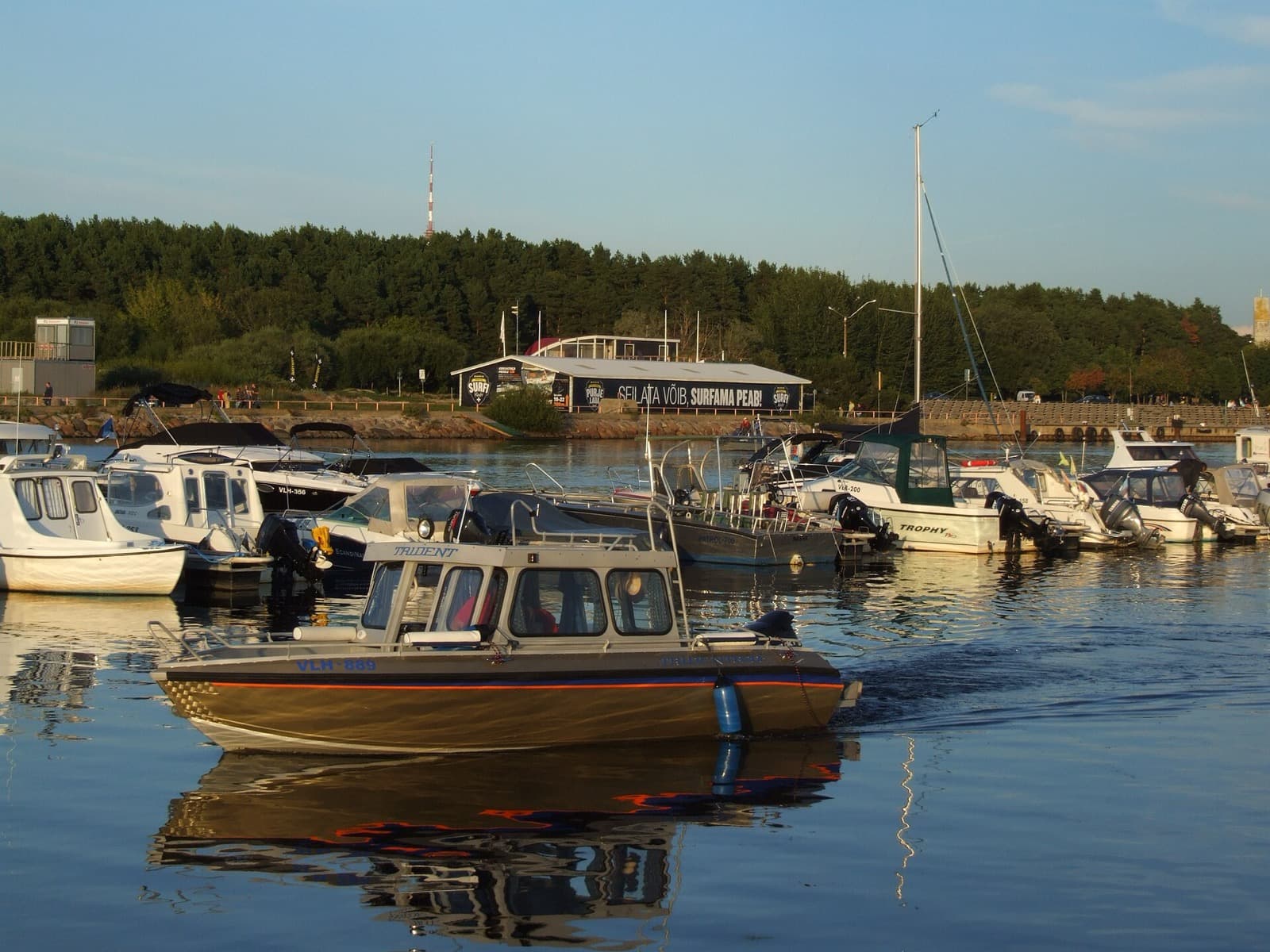
- What it is: Tallinn's prestigious seaside coast in the affluent north-east, its own linnaosa, with the city's biggest beach, the Olympic marina and pine-and-villa living.
- Who it suits: well-off families and outdoorsy, sailing types who want space, sea air and forest, and do not mind driving for it.
- What it costs: a wide range, about 5 150 EUR / m² ≈ $550 / sq ft to buy for a flat, with waterfront villas far higher.
- What people complain about: it is car-dependent, buses only, spread out and quiet, with big summer beach crowds and traffic.
First impressions
Pirita is low-density and green: detached houses and newer developments set among pine forest and the Pirita river, opening onto a long sandy beach, a big marina, the ruined St Bridget's convent and the TV tower. It feels like an affluent coastal suburb, spacious and calm, yet minutes from downtown by road.
Its own city district in the north-east, Pirita is one of Tallinn's wealthiest, and it is built around recreation rather than commerce. The whole point is the beach, the boats and the forest, and everything else, the shops, the connections, the density, is deliberately thin.
The honest caveat is that this is the most car-dependent of Tallinn's central-ish districts. With buses the only public transport and errands spread out, life here works best with a car in the drive.
Who lives here, and what the streets look like
Pirita is one of Tallinn's wealthiest districts, around 19,700 people, mainly homeowning families, professionals and outdoorsy or sailing types who want space, sea air and forest. It is historically very Estonian, 71.5% at the 2021 census, and long-settled.
The streetscape is suburban and green. Individual houses and newer developments sit among pines, the marina and the beach define the shore, and the convent ruins and TV tower punctuate the skyline. Only the seafront promenade is truly walk-everywhere; inland it is spacious, quiet streets where you tend to drive between things.
Getting around
Pirita runs on buses only, with no tram or rail: lines such as 1A, 8, 34A, 38 and 49 run the coast road between the district and the centre, about fifteen minutes by road. The seafront is walkable and lovely, but the district is spread out inland, so most residents rely on a car for daily errands. It is the most car-dependent of the seven districts in this set.
Typical weekday minutes from Pirita, with the icon showing how. Times are indicative for a typical weekday morning, measured from the neighborhood centre; the icon shows the fastest sensible way. Minutes were measured with the Google Routes API for a typical weekday around 08:00., 2026-08.
Daily life
Local needs are met by a Selver and a Rimi and small grocers near Pirita centre and Merivälja, but the district is spread out and errands often mean driving, so this is not a walk-everywhere neighborhood. For food delivery, Wolt and Bolt Food both serve Pirita, though coverage and times thin out toward the outer edges, which is worth knowing before you rely on it.
Local Places Worth Knowing
Independent and close by, chosen on merit. Nobody pays to appear here.
The Kalev Yacht Club restaurant at the marina, with sea and harbour views and fresh European and Estonian cooking, a local hidden gem.
View on Google MapsA garden café on the green side of the district by the Botanic Garden, coffee and cake among the plantings; seasonal, so check opening.
The dramatic ruined 1436 Bridgettine convent above the river mouth, an open-air landmark and a summer concert venue.
The district's everyday shopping anchor near Pirita centre, with a supermarket and daily services for a low-density seaside neighborhood where most errands mean driving.
Checked August 2026. Places close and change, so tell us if something here is out of date.
Schools and families
Pirita is a spacious, safe place to raise children, with the beach and forest as a back garden, and Estonian children are not tied to a single catchment. Estonia publishes no per-school quality ranking. It is the sort of gap we would rather flag than fill, which is part of why we build these Tallinn guides the way we do. Check the specific schools and their admission before you sign a lease or purchase.
Kids Friendly. Space, sea air, the beach and forest trails make it a fine place to raise children, though its low density means most trips, including to friends and clubs, mean a car ride.
Pet Friendly. Beach, pine forest and river trails make Pirita superb for dogs (mind the beach-season rules), and dogs ride transit; the trade-off is that you will usually drive there.
Green space, leisure and eating out
Green space and leisure are the whole reason to be here. Pirita beach is the city's largest, backed by the river and marina, the pine forests and ski and run trails of Kloostrimetsa, the Tallinn Botanic Garden, the TV Tower grounds and the convent ruins. Eating out is small and seasonal, with the marina-side Kalevi Jahtklubi Resto and garden cafés doing the work rather than a restaurant row.
What it costs
Pirita spans a wide range, from apartments to waterfront villas. Buying a flat runs about 5 150 EUR / m² ≈ $550 / sq ft on the Land Board transaction band, with premium houses far higher, against a city average of around €3,051 per square metre. Estonia publishes no per-district monthly rent, and flat supply here is limited, so we show a mid-to-upper estimate of roughly 725 EUR / mo for a one-bed as a guide rather than a fixed Pirita figure.
Weather and climate
Seasonal averages for Tallinn, one representative month per season. Estonian Weather Service (Riigi Ilmateenistus) 1991-2020 normals (Tallinn) via Wikipedia climate box.
The honest downsides
It is genuinely car-dependent. Buses are the only public transport, the district is spread out, and errands, school runs and clubs mean driving, so life here without a car is a real constraint rather than a minor one.
Quiet comes with crowds in season. Pirita is spread out with little street life or nightlife most of the year, and then the beach draws big summer crowds and heavy traffic along the coast road, so the calm is seasonal.
Crime and safety
Pirita is quiet, affluent and reads as very safe. Estonia publishes crime only nationally, with no clean Tallinn-only or per-district figure. Tallinn is a low-crime capital, and the petty-theft risk that concentrates around tourist Vanalinn is not a Pirita concern. Reporting and trust in the police are reasonably high, so the national numbers track real incidence fairly closely.
Is this you?
If you want the sea, forest and space, and a car is part of your life anyway, Pirita is Tallinn's finest coastal living. If you want the same green calm with a tram to the centre and museums on the doorstep, Kadriorg gives you the prestige and the leaf without leaning on a car.
Want to know what homes here are actually worth?
Join the waitlistHow we source this
How we put this together. Gathered on the ground by our local field team and written up by the Apraiz research team. Every figure above carries its own source and date. The scores are not computed by the build; walking and transport will use open map and transit data first, then Apraiz's own model. We update prices quarterly, transport and amenities twice a year, and school data when the source publishes.
Sources: Investropa (Estonian Land Board data), Investropa, Realting (Statistics Estonia data), Wikipedia, Estonian Ministry of Justice, Justice Statistics portal.
Safety and crime in Tallinn →