
Long Story ShortReadHide
- What it is: Tallinn's bohemian wooden-house quarter by the sea, ex-fishing and factory, now the city's creative heart around Telliskivi and the restored station market.
- Who it suits: young professionals, creatives and young families who want character, the seafront and a five-minute walk to the trains, and can pay the rising prices.
- What it costs: premium but below the Old Town, about 5 100 EUR / m² ≈ $550 / sq ft to buy, with new waterfront far higher.
- What people complain about: success has pushed prices up and thinned the old character with new-build blocks, and the wooden stock has thin walls and renovation quirks.
First impressions
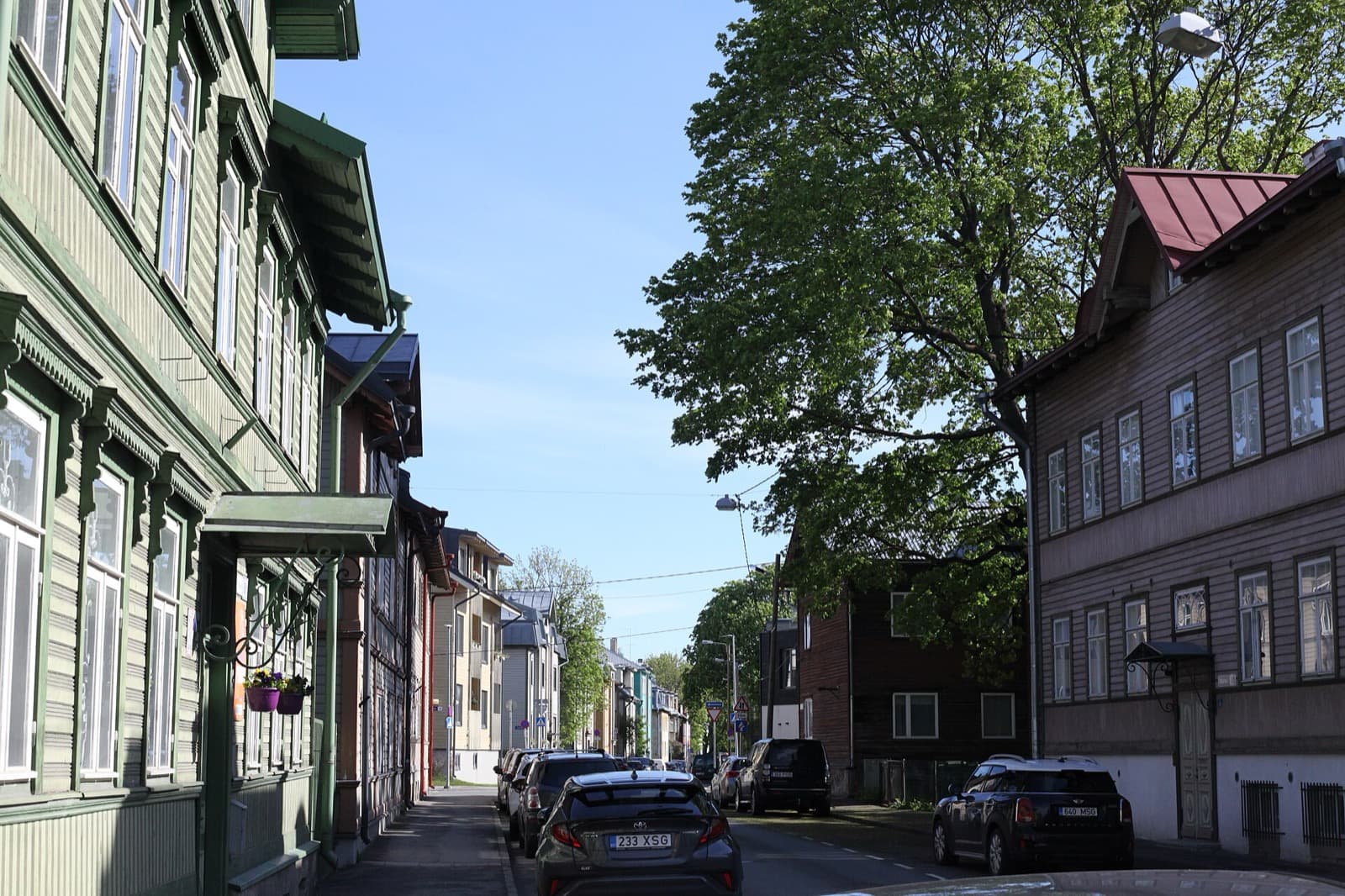
Kalamaja is rows of painted early-1900s wooden apartment houses on quiet gridded streets, with the Telliskivi Creative City, a repurposed factory and rail complex of around 200 studios, shops, cafés and galleries, as its beating heart. The restored Balti jaam market sits on its edge, and a reclaimed seafront at Kalarand and Lennusadam is a few blocks north. It feels lived-in, artsy and a little raw.
Part of Põhja-Tallinn, the northern district, Kalamaja has gone in fifteen years from working-class fishing-and-factory roots to Tallinn's coolest address, and the two versions of it still overlap on the same streets. The result is a district with genuine character rather than a manufactured one.
The honest caveat is that the popularity is now the pressure: prices and rents have climbed sharply, and new-build blocks along the water are steadily changing the low wooden skyline the district is loved for.
Who lives here, and what the streets look like
Kalamaja draws a young, creative, well-educated crowd: professionals, designers, students and, increasingly, young families, pulled in over the last fifteen years by the wooden houses and the scene. It gentrified fast, and around 12,900 people now live here.
The streetscape is the draw. Two-storey timber tenements in ochre, green and faded red line flat, walkable streets, with the factory brick of Telliskivi at one end and the sea at the other. It is scruffier and warmer than the polished districts, and the mix of studios, cafés and family homes gives it real daily life rather than a showpiece feel.
Getting around
Balti jaam sits right at the southern edge, so Kalamaja is unusually well connected for a wooden-house district. It is the terminus of tram lines 1 and 2 and many buses, and the start of the Elron rail network, which puts the whole country's trains on the doorstep. The Old Town and the ferry port are an easy walk, and the flat grid and the seafront Culture Kilometre make it excellent for cycling.
Typical weekday minutes from Kalamaja, with the icon showing how. Times are indicative for a typical weekday morning, measured from the neighborhood centre; the icon shows the fastest sensible way. Minutes were measured with the Google Routes API for a typical weekday around 08:00., 2026-08.
Daily life
Everyday shopping on foot is a strength. The Balti jaama turg market hall covers produce, fish and meat, a Rimi and Selver handle the big shop, and small grocers and bakeries like Kalamaja Pagarikoda fill in between, with the Telliskivi food scene close by. For food delivery, Wolt and Bolt Food both cover the district densely, so a night in is easy.
Local Places Worth Knowing
Independent and close by, chosen on merit. Nobody pays to appear here.
The local brunch favourite in a vintage wooden house on a quiet residential street, cosy, independent and family and pet friendly.
The anchor all-day restaurant of Telliskivi Creative City, a high-ceilinged former factory hall with a well-priced Estonian and European menu and long weekend brunches.
View on Google MapsA vast 1917 seaplane-hangar maritime museum on the Kalamaja shore, with a submarine, a seaplane and the harbour grounds to walk.
View on Google MapsA restored multi-level station market with produce, fish, meat, street food, vintage and flea stalls, the district's daily larder on its southern edge.
View on Google MapsChecked August 2026. Places close and change, so tell us if something here is out of date.
Schools and families
Kalamaja increasingly suits young families, and the central-north schools are within easy reach, but Estonian children are not tied to a single catchment. Estonia publishes no per-school quality ranking. It is the sort of gap we would rather flag than fill, which is part of why we build these Tallinn guides the way we do. Check the specific schools and their admission before you sign a lease or purchase.
Kids Friendly. A growing young-family district: quiet gridded streets, the seafront promenade, playgrounds and Kalamaja park, with the market and the Telliskivi scene a short walk away.
Pet Friendly. Flat walkable streets, the Kalarand seafront and Kalamaja park make it one of the city's easiest districts for dogs, and dogs ride Tallinn transit.
Green space, leisure and eating out
Green space and leisure are woven through Kalamaja. The Kalarand beach and the reclaimed Kalaranna promenade sit at the doorstep, the Culture Kilometre runs the shore, Kalamaja park (a former cemetery, cleared in 1964) gives a green centre, and the Seaplane Harbour grounds anchor the north. Eating out leans on Telliskivi, where F-hoone and its neighbours turn old factory halls into an all-day scene, backed by the wooden-house cafés like Boheem.
What it costs
Kalamaja is a premium district, below the Old Town but well above the city average. Buying runs about 5 100 EUR / m² ≈ $550 / sq ft on the Land Board transaction band, with new waterfront at Kalaranna and Noblessner reaching far higher. Estonia publishes no per-district monthly rent, so we show the premium-central band, roughly 800 EUR / mo for a one-bed, as a guide rather than a Kalamaja-specific figure.
Weather and climate
Seasonal averages for Tallinn, one representative month per season. Estonian Weather Service (Riigi Ilmateenistus) 1991-2020 normals (Tallinn) via Wikipedia climate box.
The honest downsides
Success has changed the district. Prices and rents have risen sharply, and new-build blocks along the water are thinning the old wooden character that made Kalamaja what it is, so you arrive to a place already partway through its own transformation.
Old wooden housing has quirks. Thin walls, wood heating in some of the stock, fire and renovation considerations and patchy parking all come with the timber tenements, so the charm carries real maintenance and comfort trade-offs.
Crime and safety
Kalamaja reads as a calm, well-liked residential district, and its old gritty edge is now mostly aesthetic. Estonia publishes crime only nationally, with no clean Tallinn-only or per-district figure. Tallinn is a low-crime capital, and the petty-theft risk that concentrates around tourist Vanalinn is far lighter here. Reporting and trust in the police are reasonably high, so the national numbers track real incidence fairly closely.
Is this you?
If you want character, the sea and a creative scene with the trains a few minutes away, and you can pay a rising premium, Kalamaja is Tallinn at its most alive. If you want the same walkability at a lower price and can trade the sea for a green centre and a mall, Kristiine to the south-west stretches the budget much further.
Want to know what homes here are actually worth?
Join the waitlistHow we source this
How we put this together. Gathered on the ground by our local field team and written up by the Apraiz research team. Every figure above carries its own source and date. The scores are not computed by the build; walking and transport will use open map and transit data first, then Apraiz's own model. We update prices quarterly, transport and amenities twice a year, and school data when the source publishes.
Sources: Investropa (Estonian Land Board data), Investropa, Realting (Statistics Estonia data), Wikipedia, Estonian Ministry of Justice, Justice Statistics portal.
Safety and crime in Tallinn →