
Long Story ShortReadHide
- What it is: an unshowy central-west residential district, its own linnaosa, mixing leafy Lilleküla wooden streets, Soviet blocks and the big Kristiine shopping centre.
- Who it suits: families and middle-income owners who want to be well-connected and close to the centre without paying a premium or living in a scene.
- What it costs: around the city average, about 3 950 EUR / m² ≈ $420 / sq ft to buy.
- What people complain about: no standout character or sights, and a housing mix that swings street by street from charming villas to tired blocks.
First impressions
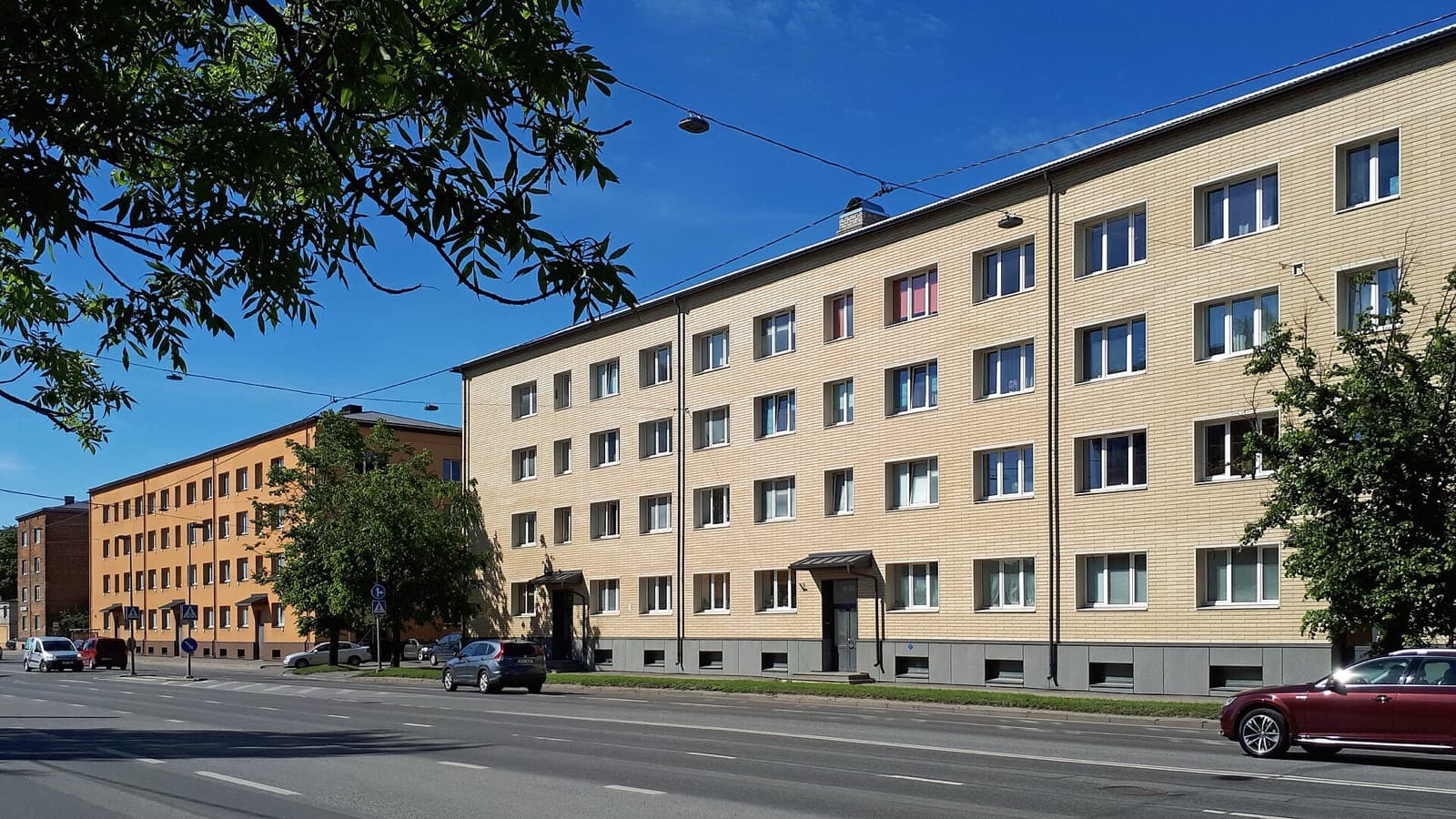
Kristiine is a varied central-west mix: the leafy wooden-house streets of Lilleküla, mid-century and Soviet apartment blocks around Tondi and Järve, and the big Kristiine Centre as the commercial anchor. It is ordinary, liveable and quietly green in patches, without a tourist gloss or a signature sight.
One of Tallinn's eight city districts in its own right, Kristiine is where a lot of everyday Tallinn actually lives: settled, mixed and practical, ten minutes from the centre but a world away from the postcard. It rewards people who value connection and value for money over character.
The honest caveat is exactly that lack of a signature. This is a functional in-between district, cut by rail lines and busy arterials, and it asks you to like comfortable and connected rather than special.
Who lives here, and what the streets look like
Kristiine is a middle-income, family-heavy district of around 31,700 people. Its make-up has shifted from mixed toward majority Estonian, 70.5% at the 2021 census, up from 57% in 1989, so it reads as a settled everyday-Tallinn cross-section rather than a scene.
The streetscape is a patchwork. Tree-lined Lilleküla has rows of timber villas and gardens, Tondi and Järve bring 1960s and 70s blocks, and the Kristiine Centre and the rail lines break the district into pockets. Quality varies noticeably from one street to the next, which is the trade for the central location and the lower prices.
Getting around
Kristiine is well served. Elron trains stop at Tondi and Kitseküla on the western line, trams run toward Tondi, and many buses cross the district, with the centre about ten minutes away. It is flat and walkable within each neighborhood, though the district is spread out and severed by rail, so a walk across it is longer than the map suggests.
Typical weekday minutes from Kristiine, with the icon showing how. Times are indicative for a typical weekday morning, measured from the neighborhood centre; the icon shows the fastest sensible way. Minutes were measured with the Google Routes API for a typical weekday around 08:00., 2026-08.
Daily life
Daily life is a strength here. The Kristiine Centre, with a large supermarket, anchors the shopping, backed by Rimi, Selver and Maxima and small grocers and bakeries tucked into the wooden streets. For food delivery, Wolt and Bolt Food both serve the district, so both the big shop and the night in are easy.
Local Places Worth Knowing
Independent and close by, chosen on merit. Nobody pays to appear here.
The Kristiine branch of the Estonian café brand, handmade pastries and coffee inside the Kristiine Centre, a reliable everyday meeting spot.
View on Google MapsAn independent artisan bakery and café on the Lilleküla and Kristiine edge, a well-liked local pastry and coffee stop.
The district's green centrepiece, a landscaped park and pond that is Kristiine's main open-air gathering place.
The district's everyday shopping anchor on Endla, a major centre with a large supermarket and the run of daily services under one roof.
Checked August 2026. Places close and change, so tell us if something here is out of date.
Schools and families
Kristiine is a genuine family district, with schools, parks and everyday shopping close, and Estonian children are not tied to a single catchment. Estonia publishes no per-school quality ranking. It is the sort of gap we would rather flag than fill, which is part of why we build these Tallinn guides the way we do. Check the specific schools and their admission before you sign a lease or purchase.
Kids Friendly. A family-heavy everyday district with parks, quiet wooden-house streets, schools and the Kristiine Centre close by; practical rather than pretty, but easy for children.
Pet Friendly. Löwenruh Park and the quiet leafy Lilleküla streets give easy walks, and dogs ride Tallinn transit. Ordinary but comfortable for dogs.
Green space, leisure and eating out
Green space is modest but real. Löwenruh Park, with its pond, is the green heart, smaller squares and the tree-lined Tondi and Lilleküla streets add greenery, and the sports facilities around Tondi serve the district. Eating out is thin and everyday, leaning on the café and mall-food scene at Kristiine Centre and independents like Kotzebue Bakery on the Lilleküla edge, rather than a destination restaurant row.
What it costs
Kristiine sits around the city average, one of the more affordable central districts. Buying runs about 3 950 EUR / m² ≈ $420 / sq ft on the Land Board transaction band, close to the Tallinn average of around €3,051 per square metre. Estonia publishes no per-district monthly rent, so we show the mid-band city figure, roughly 650 EUR / mo for a one-bed, as a guide rather than a Kristiine-specific number.
Weather and climate
Seasonal averages for Tallinn, one representative month per season. Estonian Weather Service (Riigi Ilmateenistus) 1991-2020 normals (Tallinn) via Wikipedia climate box.
The honest downsides
There is no standout character. Kristiine has no signature sight and no strong identity, a functional in-between district cut by rail lines and busy arterials, so it suits people who want convenience over charm.
The housing is a patchy mix. Quality varies street by street, from charming wooden villas to tired Soviet blocks, so what you get depends heavily on the exact address rather than the district average.
Crime and safety
Kristiine is an ordinary, settled residential district and reads as calm. Estonia publishes crime only nationally, with no clean Tallinn-only or per-district figure. Tallinn is a low-crime capital, and the petty-theft risk that concentrates around tourist Vanalinn is not a Kristiine feature. Reporting and trust in the police are reasonably high, so the national numbers track real incidence fairly closely.
Is this you?
If you want to be central and well-connected for around the city average, and you value a comfortable everyday district over a scene, Kristiine is a sensible, honest choice. If you want more character and street life for a similar or slightly higher price, Kalamaja to the north trades the mall and the quiet for wooden houses and the sea.
Want to know what homes here are actually worth?
Join the waitlistHow we source this
How we put this together. Gathered on the ground by our local field team and written up by the Apraiz research team. Every figure above carries its own source and date. The scores are not computed by the build; walking and transport will use open map and transit data first, then Apraiz's own model. We update prices quarterly, transport and amenities twice a year, and school data when the source publishes.
Sources: Investropa (Estonian Land Board data), Investropa, Realting (Statistics Estonia data), Wikipedia, Estonian Ministry of Justice, Justice Statistics portal.
Safety and crime in Tallinn →