
Long Story ShortReadHide
- What it is: the old wine merchants' quarter on the quay north of the centre, 0.85 km² of eighteenth-century stone, antique shops and Sunday markets.
- Who it suits: people who want central Bordeaux without living inside the nightlife, and families who are not ready to leave the city.
- What it costs: 4 969 EUR / m² ≈ $530 / sq ft to buy, the dearest of the three districts here; tenants pay 13.9 to 14.8 EUR/m² a month excluding charges.
- The catch: you pay a premium for the address, the flats are old, and the antiques trade means some of the shopping is not for you.
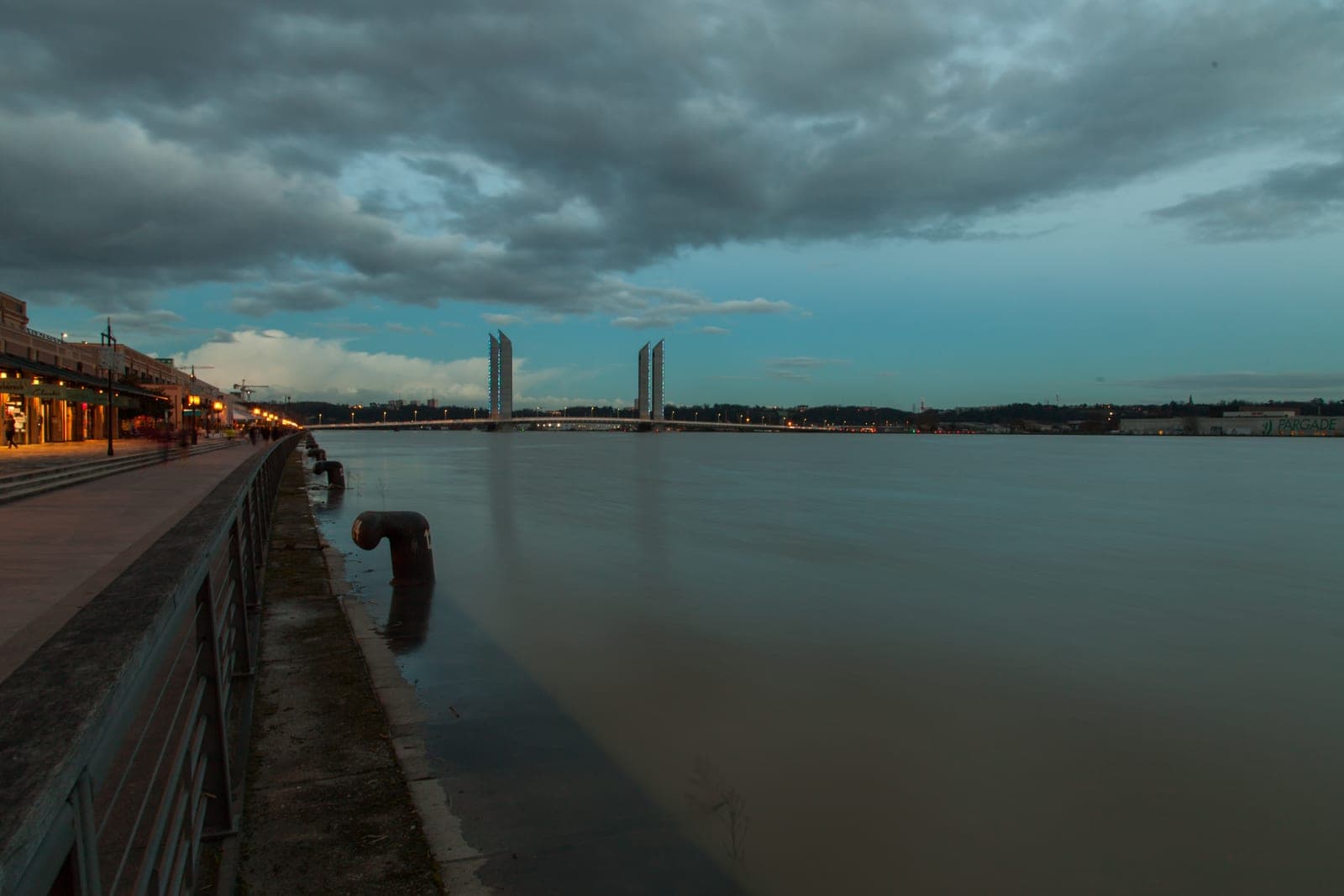
First impressions
The Chartrons reads as a calmer, richer version of the centre, and the reason is history rather than planning. Foreign wine merchants, largely Irish, Dutch and German, were kept outside the city walls, so they built their own quarter on the quay: tall narrow houses with a cellar underneath, a warehouse behind and the river in front. That grid is still here, and so are the cellars.
What you notice walking in is the width. Where Saint-Pierre is a medieval knot, the Chartrons runs in long straight streets parallel to the water, with the quay on one side and the cours Portal and rue Notre-Dame threading through it. It is flat, it is quiet after eight, and it has the one thing the centre does not: room.
Who lives here, and what the streets look like
A typical figure across this district's two small statistical areas is 27,995 EUR a year of disposable income per consumption unit, the highest of the three Bordeaux districts covered here and well above Saint-Pierre's 22,735. That gap is the district in one number. This is where people move when they have decided to stay in Bordeaux rather than pass through it.
The building stock is eighteenth and nineteenth century, two to four storeys, often with a courtyard and a cellar. There are more family-sized flats here than in the centre and more échoppes, the single-storey Bordelais terraced house with a garden behind, in the streets away from the water. Lifts are still rare. Renovation is constrained by the UNESCO inscription, which is why the façades are consistent and the works are slow.
Getting around
Trams B and C run along the quay, with eight stops inside the district boundary, and the centre is about ten minutes away. Twelve bus stops fill in the rest. There is no metro in Bordeaux and no plan for one, so the tram is the network.
The other route is the quay itself. It is flat and continuous for kilometres, which makes cycling genuinely faster than the tram for anything in the northern half of the city, and walking to the centre a twenty-minute proposition rather than a chore. The airport is the weak point, as it is everywhere in Bordeaux: Mérignac is west of the city and the journey involves a change.
Typical weekday minutes from Marché des Chartrons, with the icon showing how. Measured door to door for a typical weekday morning from the market on the quay; the icon shows the fastest sensible way., 2026-08.
Daily life
This is the district's strongest suit. Thirteen food shops and two markets inside 0.85 km², against ten shops and no market in Saint-Pierre. The Marché des Chartrons on Sunday morning is the one everyone means, food at one end of the quay and flowers, books and bric-à-brac at the other, and it is a genuine weekly event rather than a tourist set piece.
Rue Notre-Dame is the antiques street, and it is worth understanding what that means for daily life: a long parade of shops that are lovely to walk past and useless for buying dinner. The practical shopping is on the cross streets and the quay, and there is a library inside the district, which the centre does not have.
Local Places Worth Knowing
Four places that tell you what the district is actually like, chosen because a resident would use them rather than because a visitor would photograph them.
The Sunday morning market along the quay, food at one end and flowers, books and bric-a-brac at the other. The event the district organises its week around. Go early for the fish.
A small museum in the 1720 merchant cellars on rue Borie. The wine trade ran out of these buildings for three centuries and the vaulted rooms are as much the exhibit as the objects.
A small Vietnamese room on cours de la Martinique with a lunch queue and a reputation that outgrew it. Useful in a district otherwise heavy on wine bars and bistros.
The bakery on rue Notre-Dame, the antiques street, and the one to know for an ordinary Tuesday rather than a Sunday, in a district shopping aimed at visitors and collectors.
Checked August 2026. Places close and change, so tell us if something here is out of date.
Schools and families
No lycée stands inside the boundary, so the Schools bar is not drawn. For a district this size that is unremarkable, and the nearest lycées are a walk or a single tram stop south, but a family with a teenager should count that journey rather than assume it.
For everything below that age this is the best of the three Bordeaux districts here. Two playgrounds, three garden spaces, a library, primary schools in the surrounding streets, and a quay wide enough and flat enough to learn to cycle on. It is also quiet in the evening in a way the centre is not, which matters more than any of the above when a child is asleep by eight.
Kids Friendly. This is where Bordeaux families who want to stay central actually live. Two playgrounds and three garden spaces inside the district, a library, primary schools in the surrounding streets, quays wide enough to learn to cycle on, and a market that makes a Sunday morning easy. Against that: no lycée inside the boundary, so a teenager commutes, and the district's flats are old, which usually means stairs.
Pet Friendly. The best of the three Bordeaux districts here for a dog. The quays run flat and car-free for kilometres straight from the district, there are three garden spaces inside the boundary rather than one, the streets are wide enough for a lead at café hour, and the Jardin Public is a short walk south. The caveats are ordinary: the quay is exposed in a westerly, and the market on a Sunday morning is no place for a nervous animal.
Green space, leisure and eating out
Three garden spaces inside the district and the Jardin Public a short walk south, which together make this the greenest of the three central districts here, though the bar is low. The real outdoor asset is the quay: continuous, car-free, and long enough to run on properly.
Eating out is a different proposition from the centre. Thirty-one restaurants and sixteen bars across a district twice the size of Saint-Pierre, which is a normal density rather than a saturated one, and the tone is wine bars and quayside dinner rather than late drinking. What that buys you is a district where you can eat well and still sleep.
What it costs
The number to start from is what people actually paid: 4 969 EUR / m² ≈ $530 / sq ft, the median across 118 recorded apartment sales inside these two statistical areas in 2025, from the state's register rather than from asking prices. Where a cellar or a parking space came with the flat the price includes it; the same median over flats sold with nothing attached is 4,947, so that choice moves the figure by 0.4% and can be ignored here.
This is the top of the three Bordeaux districts on these pages, which run 4,278 in the Bassins à Flot, 4,532 in Saint-Pierre and 4,969 here. A 16% spread across the three is narrow, and what it buys at this end is the market, the quiet and the family-sized stock rather than a better building.
On renting there are two kinds of figure. What sitting tenants pay is 14.8 EUR/m² a month excluding charges in the streets behind the quay and 13.9 on the quay side itself, from the Bordeaux rent observatory's 2024 survey, with quartiles of 12.6 to 18.0 and 11.7 to 16.7. The district straddles two of the observatory's zones and they are never averaged. The asking rent is 16.0, charges included and not separable, published per commune, so it describes the whole city rather than this quarter.
Bordeaux caps rents under the same national scheme as Paris and Lyon, and a listing above the ceiling for its own category is unlawful. The arrêté in force was signed on 6 July 2026 and runs to 24 November 2026. This page carries no ceiling figure because the only machine-readable table published for Bordeaux is the 2023 edition, and a stale cap is worse than none: check the current arrêté for the flat's own sector, room count, era and régime.
Set the price against the income and a 45 m² one-bedroom at 4,969 EUR/m² is roughly 224,000 EUR, about eight times the 27,995 EUR a year a typical one of this district's areas records. That is a better ratio than Saint-Pierre despite the higher price, because the people here earn more.
Weather and climate
Seasonal averages for Bordeaux, one representative month per season. Météo-France 1991-2020 normals for station Bordeaux-Mérignac, the official station for the city, read 12 August 2026 via Infoclimat. Seasons are the representative months: January, April, July and October. Sunshine hours a day are the monthly totals divided by the days in the month (January 89.8 h, April 186.0 h, July 256.0 h, October 150.3 h). Annual figures: mean daily maximum 18.9 °C, mean daily minimum 9.6 °C, 924.9 mm of rain and 2,069.9 hours of sunshine. Rain days are left null because the count of days at or above 1 mm is not filled in on the published normals table. What the numbers say about living here: Bordeaux is mild and wet rather than sunny and dry, which surprises people who file it under south-west France. It takes 924.9 mm of rain a year, more than Lyon and nearly twice Marseille, spread evenly with no dry season, and January is both the wettest month and the darkest at under three hours of sun a day. Summer is warm rather than fierce, 27.1 °C by day in July, and winter frost is occasional at a 3.7 °C mean minimum. The Atlantic is an hour away and the weather comes from it.
The honest downsides
You pay for the name. This is the dearest of the three districts and the premium is for the address and the market rather than for better buildings. A comparable flat three streets north, in Bacalan, costs meaningfully less.
The flats are old and the works are slow. Stone, stairs, courtyards, and a UNESCO inscription that constrains what you may change. Charges on an old building can be heavy and they sit inside the advertised rent where you cannot see them.
The shopping is partly not for you. An antiques street is a pleasure to live beside and no help on a Tuesday. The genuinely useful shops are fewer than the shopfront count suggests.
The quay is exposed. Beautiful in June, and a wind tunnel in a westerly gale in February.
Crime and safety
France publishes recorded crime per commune, and Bordeaux is a single commune, so there is no Chartrons figure and nobody can honestly give you one. The numbers beside this section are for the whole city.
Bordeaux's theft from the person rate, 390.6 per 10,000 residents against 91.0 for France, is more than four times the national rate, and robbery, 38.3 against 7.2, runs the same way. Home burglary, at 6.9 per 1,000 dwellings against 5.6, is close to normal, and domestic violence is at the national rate.
Street theft is a crowd phenomenon, and this district is not where the crowds are: 16 bars and 31 restaurants spread over 0.85 km², with an evening rhythm that ends earlier than the centre's. The sensible reading is that the city's theft figure describes Sainte-Catherine, the trams and the centre's squares more than it describes these streets, while the burglary figure, close to the national rate, is the one that applies to a flat here as much as anywhere.
Is this you?
The Chartrons suits someone who wants to be central in Bordeaux without living inside its noise, and who will actually use a Sunday market. It is the obvious choice for a couple with a small child who are not ready to move out to the suburbs, and for anyone whose weekend involves the quay.
It is the wrong place if you want the cheapest way into central Bordeaux, because that is Bacalan or the Bassins à Flot, or if you need a lycée within walking distance. Whether you lease or purchase, walk the quay in a February westerly before you decide the river view is the selling point.
Want to know what homes here are actually worth?
Join the waitlistHow we source this
How we put this together. Gathered on the ground by our local field team and written up by the Apraiz research team. Every figure above carries its own source and date. The scores are not computed by the build; walking and transport will use open map and transit data first, then Apraiz's own model. We update prices quarterly, transport and amenities twice a year, and school data when the source publishes.
Sources: DVF (Demandes de valeurs foncières), data.gouv.fr, Observatoire des loyers de l'agglomération bordelaise, via the Observatoires des loyers network, Carte des loyers 2025, DHUP and ANIL with leboncoin and Groupe SeLoger, INSEE, SSMSI, via data.gouv.fr, Préfecture de la Gironde, Wikipédia (fr), Musée du Vin et du Négoce de Bordeaux, UNESCO World Heritage Centre, OpenStreetMap contributors, via the Overpass API.
Safety and crime in Bordeaux →Nearby: Saint-Pierre · Bassins à Flot