
Long Story ShortReadHide
- What it is: a purpose-built waterfront eco-district south of Södermalm, laid out on an old industrial harbour and organised around a lake and a canal.
- Who it suits: families and professionals who want new, bright and by the water, and who are happy to travel by tram, bike and ferry rather than car.
- What it costs: a modern waterfront premium, roughly 65,000 to 82,000 kr per m² to buy, more at the water's edge.
- What people complain about: it can feel new and a little uniform, and by design you lean on the tram and the ferry.
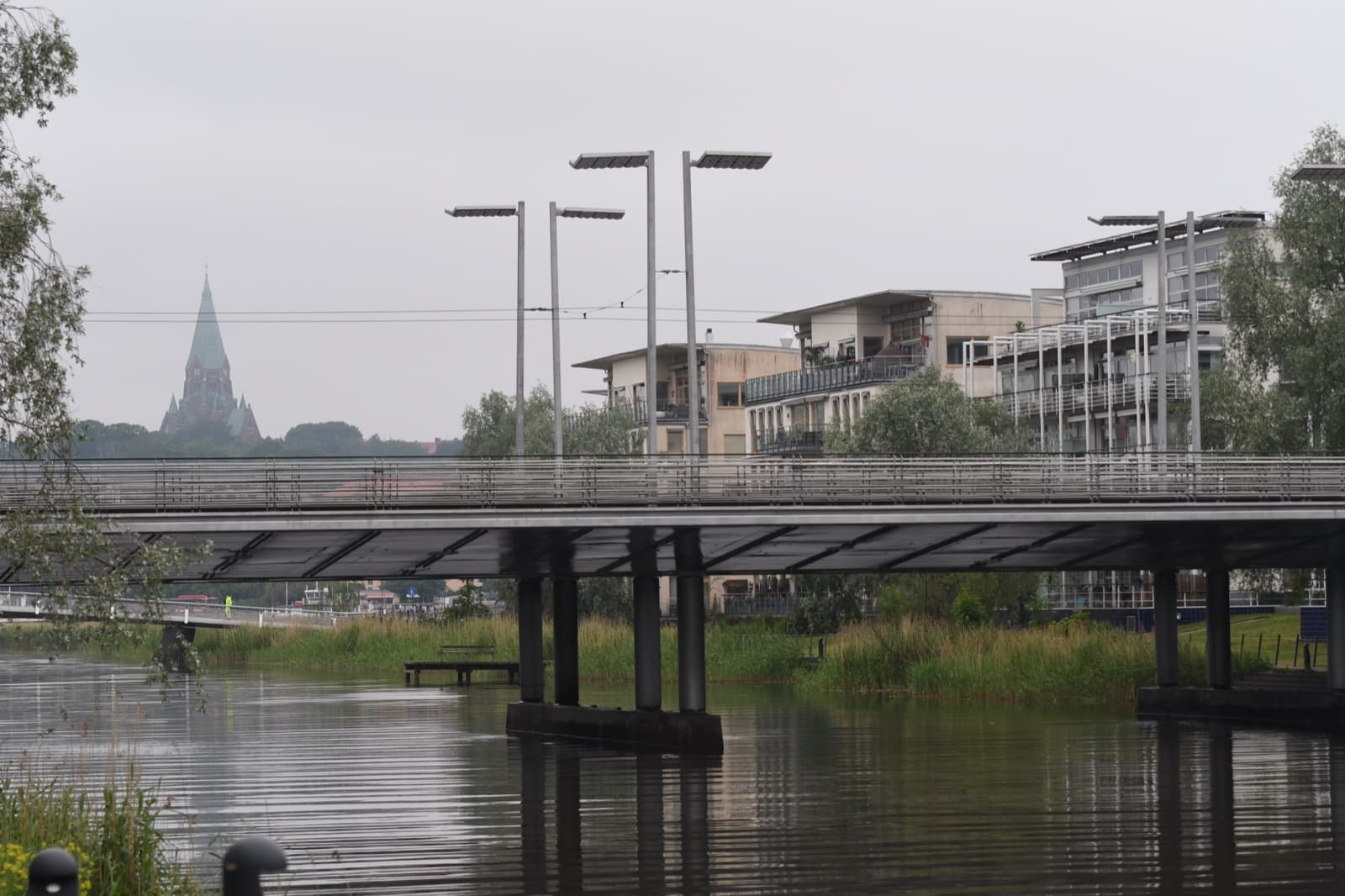
First impressions
Hammarby Sjöstad, Sjöstan to everyone who lives here, is one of the most deliberate pieces of city Stockholm has ever built. It sits just south of Södermalm, across the water, on ground that was a polluted tangle of harbours and warehouses until the late 1990s. What stands there now is a coherent, architect-planned district of mid-rise blocks in glass and render, wrapped around the lake Hammarby Sjö and the Sickla canal.
Water organises everything. Quays, jetties and walkways run along both shores, a reed park drops wooden piers into the shallows, and the tram threads through the middle of it. The look is unmistakably early-2000s and consistent, less an old neighborhood that grew than a whole district designed at once.
This is a green, family-minded, water-facing place that wears its sustainability on its sleeve, and it is proud of it.
Who lives here, and what the streets look like
Sjöstan was built and marketed as a lakeside community for a broad but comfortable crowd, and it reads that way: families and working professionals who commute into the centre and want space, light and water in return. Mean income among earners here runs about 48,600 kr a month (Stockholm stad, Områdesfakta, 2024), comfortably above the city average.
The streetscape is modern and tidy, with ground-floor cafes, restaurants and services along the quays and the main allée, and prams and bikes everywhere. It is well kept and well used, and the water is never more than a block away.
Getting around
The Tvärbanan light rail runs straight through Sjöstan, with stops along Hammarby Allé, and interchanges to the metro at Gullmarsplan. A free canal ferry crosses to Barnängen on Södermalm in a few minutes and takes bikes, and buses fill in the rest. The district was designed for low car use, so it is very walkable and cyclable along the water, at the cost of leaning on that network if you do drive.se.
Typical weekday minutes from Luma, with the icon showing how. Times via Google Routes API for a typical weekday ~08:00, measured from the neighborhood centre; the icon shows the fastest sensible way (walk, bike, transit or car), 2026-08.
Daily life
Day to day, Sjöstan is largely self-contained. Grocers, cafes and restaurants line the quays and the central allée, and for a bigger shop or a night out, Södermalm is a short ferry or tram ride away. The real texture of daily life here is the water and the green: promenades, jetties, the reed park and the trails of the Nacka reserve on the eastern edge.
For food delivery, Foodora and Wolt both cover Sjöstan, each with its own district listings.
Local Places Worth Knowing
Independent and close by, chosen on merit. Nobody pays to appear here.
The glass pavilion that has served as the district's environmental information centre since 2002, where residents, students and visiting delegations come to understand how the Hammarby Model works.
An established bakery and patisserie from the well-known pastry chef, in the heart of Sjöstan for bread, cakes and fika.
A neighborhood restaurant on a pier by the Sickla canal, one of the area's waterfront tables.
A Japanese kitchen by the harbour, a local favourite among Sjöstan's sushi regulars.
Places close and change, so tell us if something here is out of date.
Schools and families
Sjöstan is a family district by design, with the parks, prams and preschools to match. Its school, Sjöstadsskolan, posts year-9 leaving grades averaging a meritvärde of 252.4 out of 340 (Skolverket via Skolkoll, 2024/25), above both the Stockholm municipal and national averages. Sweden lets you apply outside your local area, but places at popular schools fill early, so it is worth checking before you sign a lease or purchase. That year-9 figure is the one cleanly sourced level; the others have no separate published metric for the area, so the panel beside this article leaves them open rather than borrowing a wider figure.
Kids Friendly. Flat, low-car and pram-friendly, most cafés welcome children, and the bigger cafés and shops nearby have changing tables and family toilets.
Pet Friendly. Continuous quays and promenades along Hammarby Sjö and the Sickla canal, several parks, and the Nacka nature reserve on the doorstep make it easy for dogs.
Green space, leisure and eating out
Green and blue space is the whole point here. The lake and canal are ringed by promenades and jetties, there are several parks and a reed wetland with piers, and the Nacka nature reserve, with its walking, running and winter trails, begins at the district's eastern edge. Eating and drinking cluster along the water, waterfront restaurants, bakeries and cafes, with Södermalm's fuller nightlife a short hop across the water.
What it costs
Sjöstan is an expensive place to buy, a premium for new, green and on the water. Flats change hands at roughly 65,000 to 82,000 kr per m², with the best waterfront addresses climbing past 90,000 (Boio, 2026); a first-hand rented two-room in the inner city runs about 9,564 kr a month (Hyror i Stockholm 2025). As across the inner city, most flats are cooperative (bostadsratt), so a monthly association fee (avgift) sits on top of the price and is easy to overlook when comparing listings.
Monthly rent as a share of a typical local income (mean per earner, before tax). The same flat costs far more second-hand than on a first-hand contract. Prices and rents in figures are in the panel beside this article. Income: Stockholm stad, Områdesfakta (Södra Hammarbyhamnen), 2024.
Weather and climate
Seasonal averages for Stockholm, one representative month per season. SMHI 1991-2020 normals (Stockholm) via Wikipedia climate box.
The honest downsides
It can feel new and uniform. Sjöstan was designed all at once, so if you want the layered, organic feel of an older district, the coherence can read as sameness.
You lean on the network. The tram, ferry and bus are excellent and the district is built around them, which is a pleasure until you need to drive, when the deliberately low car provision starts to show.
Crime and safety
Sjöstan feels like a calm, family-safe district, and as across central Stockholm the everyday risk is theft rather than violence, the opportunistic kind that follows people and crowds. Local police describe Sjöstad as very low-crime: it accounts for only around 5 percent of Södermalm's reported crime despite roughly 18 percent of the borough's residents, with bike theft the main everyday nuisance (Tidningen Hammarby Sjöstad). In a quiet, self-contained waterfront district like this, visible rough sleeping and street begging are rare, seen more around the transport hubs and shopping areas nearby than on the quays. A standalone per-1,000 crime rate for the district is not published, with the fuller picture on the Stockholm safety page.
Is this you?
If you want new, bright and by the water, with trams and ferries instead of a car and a nature reserve on your doorstep, Sjöstan is worth the premium. If you want an old flat, a dense high street and late nights on your doorstep, Södermalm across the water will suit you better.
Want to know what homes here are actually worth?
Join the waitlistHow we source this
How we put this together. Gathered on the ground by our local field team and written up by the Apraiz research team. Every figure above carries its own source and date. The scores are not computed by the build; walking and transport will use open map and transit data first, then Apraiz's own model. We update prices quarterly, transport and amenities twice a year, and school data when the source publishes.
Sources: Boio (Svensk Mäklarstatistik based), Stockholm stad, Hyror i Stockholm 2025 / SCB, Stockholm stad, Områdesfakta, Skolverket, via Skolkoll, Tidningen Hammarby Sjöstad, Brå (National Council for Crime Prevention).
Safety and crime in Stockholm →