
Long Story ShortReadHide
- What it is: Riga's medieval UNESCO core, a compact warren of cobbled lanes, Gothic and Baroque fabric and church spires between the Daugava and the canal parks, still lived in above the shops.
- Who it suits: well-off owners, expats and diplomats who want to live inside a Hanseatic old town and can accept crowds and thin everyday amenities.
- What it costs: the top band in the city, roughly 4 000 EUR / m² ≈ $430 / sq ft to buy for renovated historic stock.
- What people complain about: tourist crowds and stag-party noise, tourist-priced groceries, and cramped, stair-heavy protected buildings that are costly to renovate.
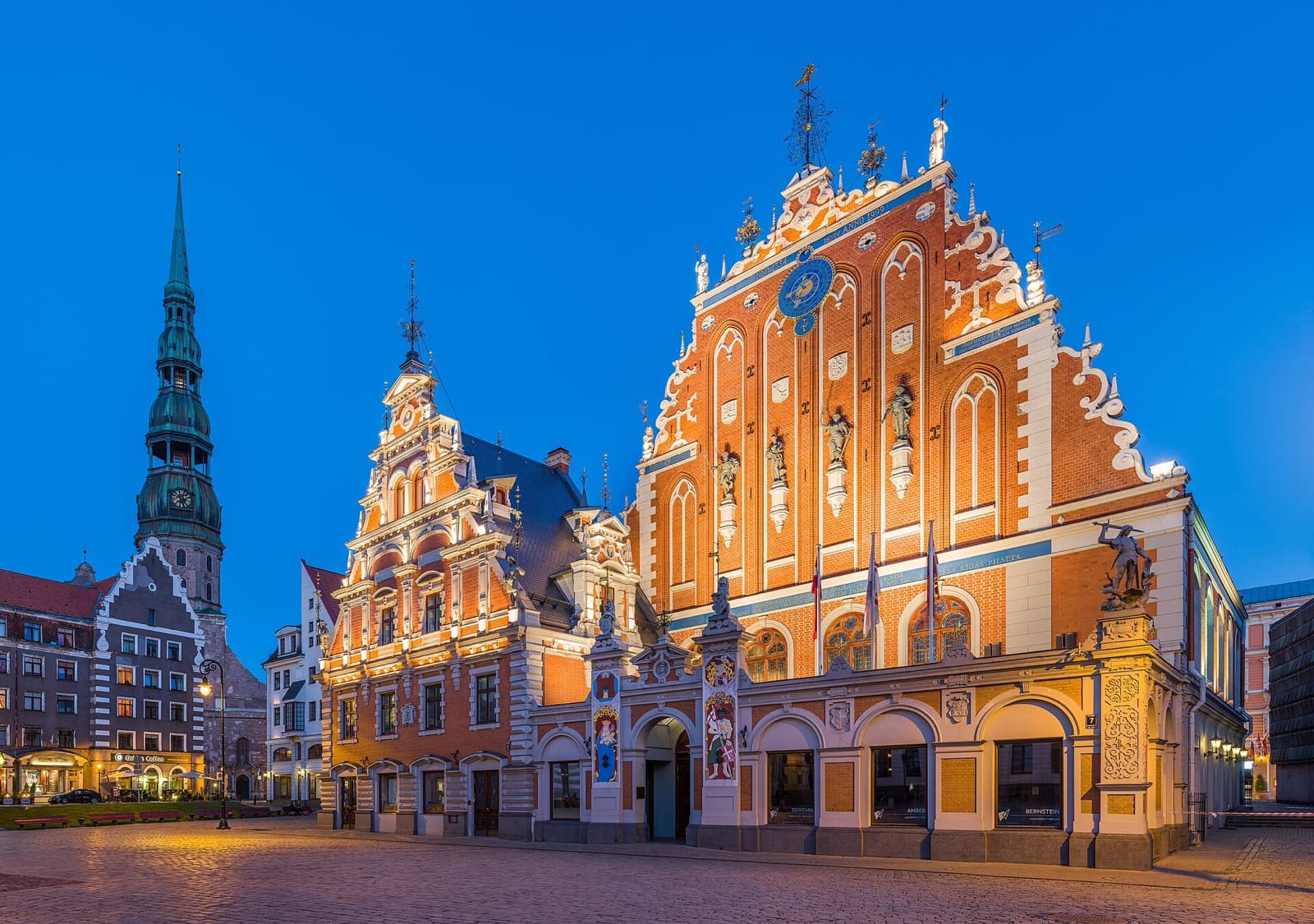
First impressions
Vecrīga is about 0.94 square kilometres of medieval, Renaissance and Baroque fabric packed between the river and a ring of canal-side parks. Riga Cathedral, the tall spire of St Peter's, the rebuilt House of the Blackheads on Town Hall Square, the Three Brothers houses, the Swedish Gate and the Powder Tower are all within a few minutes' walk of each other. The streets have been closed to through-traffic since the early 1990s, so it reads as a beautiful, walkable, tourist-busy stage set.
Only around 2,140 people actually live here. The daytime crowd is tourists and office workers, and a large share of the flats are run as short-lets, so the resident community is thin even as the district is one of the most famous addresses in the Baltics.
The honest caveat is that living inside a UNESCO old town means living with its crowds, its nightlife and its prices, and with the practical limits of protected historic buildings.
Who lives here, and what the streets look like
The residents are a small, well-off group: owners in converted historic flats, some older long-term Rigans, expats and diplomats, and the investors behind the short-let apartments. It is a place people visit far more than they live in.
The streetscape is the whole point. Cobbled lanes open onto squares, medieval merchant houses lean over the pavements, and the canal green belt and the Daugava embankment frame the edges. It is gorgeous and atmospheric, and busy in a way the quieter districts never are.
Getting around
Vecrīga is pedestrian at heart, with no through-cars on most lanes. Trams and trolleybuses ring the edges along 13. janvāra iela, the Kaļķu and Aspazijas axis and the canal, and Riga Central Station plus the international coach terminal are a five-minute walk, so the whole network and the ferry port are close. You walk to almost everything central.
Typical weekday minutes from Vecrīga, with the icon showing how. Times are indicative for a typical weekday morning, measured from the neighborhood centre; the icon shows the fastest sensible way. Minutes were measured with the Google Routes API for a typical weekday around 08:00., 2026-08.
Daily life
Everyday shopping inside the walls is limited and tourist-priced: a small Rimi, convenience shops, bakeries and delis. Residents top up at the Central Market or the Origo and Galleria malls by the station, both a few minutes' walk. For food delivery, Wolt and Bolt Food both cover it densely, so a night in is easy even where the grocers are thin.
Local Places Worth Knowing
Independent and close by, chosen on merit. Nobody pays to appear here.
A cult, cosy independent coffee house tucked on quiet Mazā Pils iela, widely called the most charming café in the Old Town.
A beloved independent Latvian and Baltic restaurant since 2014, exposed stone and timber, grey peas with bacon and a Michelin Bib Gourmand, on Kungu iela.
View on Google MapsThe reconstructed 14th-century guild house with its Roland statue on Rātslaukums, the medieval heart of the Old Town.
A small independent bakery-café on Kalēju iela known for the cruffin, a croissant and muffin hybrid, and good coffee.
Checked August 2026. Places close and change, so tell us if something here is out of date.
Schools and families
The central selective gymnasiums, including Riga State Gymnasium No. 1, sit in adjacent Centrs rather than inside the walls, so families here look just outside for schooling. Latvia does publish a per-school ranking from centralised-exam results (the Draudzīgā aicinājuma fonds ranking on konkurss.lv), but that ranking is by named selective gymnasium rather than by catchment, so it maps to a district imperfectly and we would rather flag that than fake a number. It is the sort of gap we would rather be honest about, which is part of why we build these Rīga guides the way we do. Check the specific schools and their admission before you sign a lease or purchase.
Kids Restricted. Atmospheric to grow up in, but the resident community is thin, everyday amenities are tourist-skewed and the nearest big parks and schools sit just outside the walls.
Pet Restricted. Dogs are welcome on transit and along the canal parks, but cobbles, crowds and little green inside the walls make it less comfortable than the leafy districts.
Green space, leisure and eating out
There is no large park inside the walls, but the Bastejkalns and City Canal green belt wraps the Old Town with lawns, water and boat trips, and Kronvalda Park and the Esplanade are minutes away. The Daugava embankment runs the western edge. Eating out is dense but tourist-facing, with genuine independents like Milda holding their own among the crowd-chasers.
What it costs
Vecrīga sits at the top of the Riga market. Buying runs about 4 000 EUR / m² ≈ $430 / sq ft as a representative premium figure, with the aggregators spanning roughly €2,900 to €7,000 per square metre depending on the building, well above the city average of around €1,800. Latvia publishes no per-district monthly rent, so we show the premium-central band, roughly 800 EUR / mo for a one-bed, as a guide rather than a Vecrīga-specific figure.
Weather and climate
Seasonal averages for Rīga, one representative month per season. LVĢMC 1991-2020 normals (Riga) via Wikipedia climate box.
The honest downsides
It is a tourist stage set first, a home second. Crowds, stag-party nightlife noise and tourist-priced everyday shopping come with the territory, and the resident community is thin.
Protected old buildings are hard work. Cramped layouts, stairs, parking headaches and costly renovation are the norm inside the walls, and genuine quiet-life grocery amenities are limited.
Crime and safety
Vecrīga is central and busy rather than dangerous. Latvia publishes crime only nationally and by city, with no per-district rate. The national homicide rate is the EU's highest, but it is concentrated in at-risk groups rather than street crime, and for a resident or visitor the everyday risk here is pickpocketing in the tourist crush and around the nearby Central Market. Treated sensibly, the Old Town reads as a normal walkable European core.
Is this you?
If you want to live inside a Hanseatic old town, walk to everything and do not mind crowds or a thin resident scene, Vecrīga is unmatched. If you want the same central access with real everyday grocers, parks and a bigger resident community, neighbouring Centrs gives you the grand architecture without the stage-set feel.
Want to know what homes here are actually worth?
Join the waitlistHow we source this
How we put this together. Gathered on the ground by our local field team and written up by the Apraiz research team. Every figure above carries its own source and date. The scores are not computed by the build; walking and transport will use open map and transit data first, then Apraiz's own model. We update prices quarterly, transport and amenities twice a year, and school data when the source publishes.
Sources: Wikipedia, Investropa, europropertydata, Central Statistical Bureau (CSP).
Safety and crime in Rīga →Nearby: Centrs · Āgenskalns · Mežaparks