
Long Story ShortReadHide
- What it is: Riga's most atmospheric wooden-house quarter on the left bank, painted timber apartment houses and brick Art Nouveau gentrifying around restored markets and cafés.
- Who it suits: young professionals, creatives and families who want character, greenery and river views at a lower price than the centre.
- What it costs: mid band, about 1 800 EUR / m² ≈ $190 / sq ft to buy, near or just above the city median.
- What people complain about: uneven housing quality in the old timber stock, and hilly, patchy pavements that make some blocks awkward on foot.
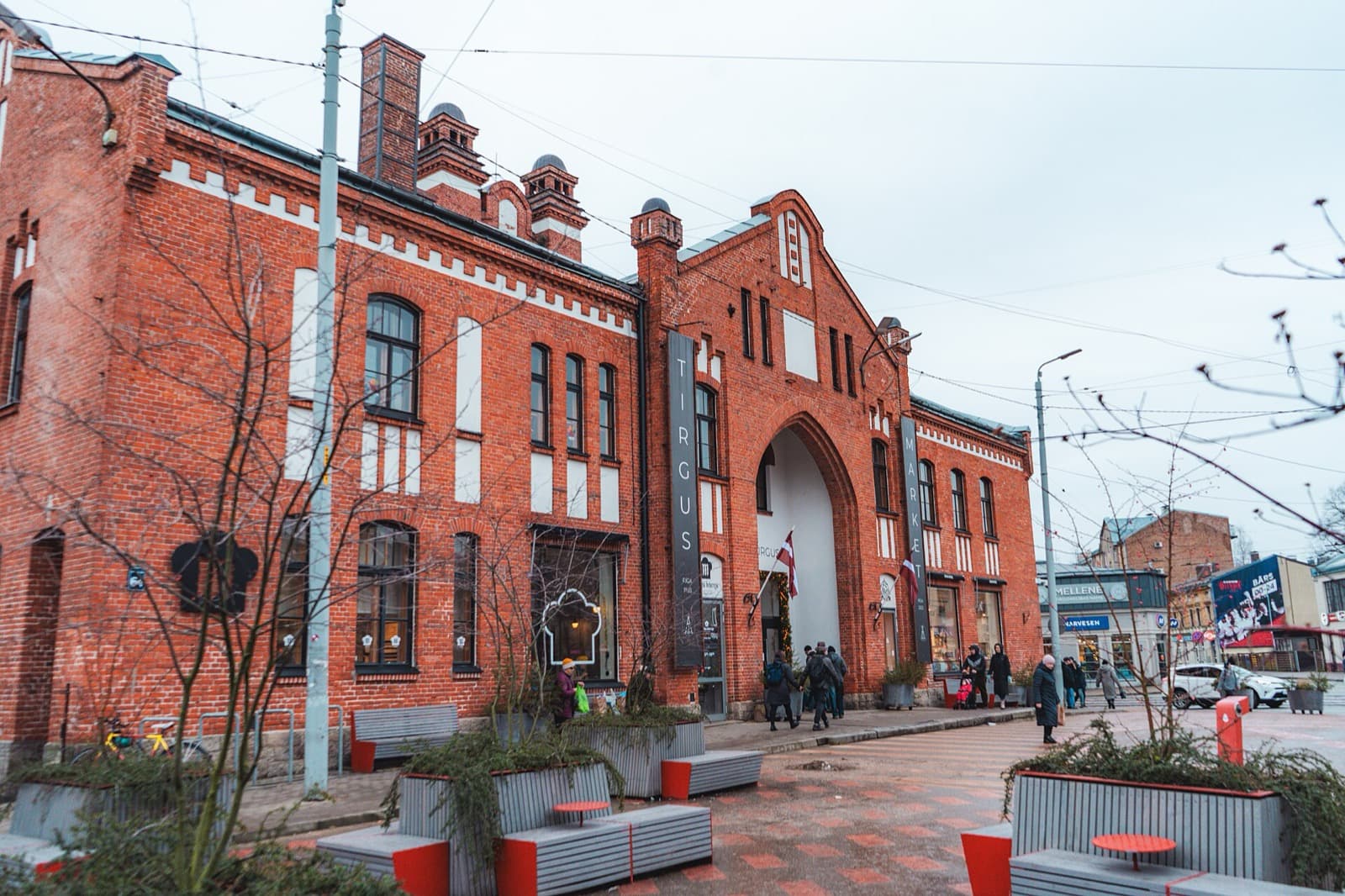
First impressions
Āgenskalns is about 4.6 square kilometres of unplanned streets, mostly built from the late 19th to the early 20th century, mixing painted wooden apartment houses, brick Art Nouveau and landmarks like the 1910 Bockslaff water tower and the Schmaeling-designed Āgenskalns Market hall. The restored Kalnciema Quarter of wooden houses anchors a weekly farmers' and artisan market. It feels lived-in, green and a little raw, with river views back to the Old Town.
Around 23,223 people live here, a mix of long-term locals and an incoming young, creative and family crowd drawn by the timber houses, the cafés and prices below the centre. It is gentrifying steadily rather than suddenly.
The honest caveat is that the wooden stock is uneven, charming villas sit next to tired, poorly insulated timber, and the hilly, unplanned layout slows you down.
Who lives here, and what the streets look like
The mix is the appeal: established locals alongside young professionals, creatives and families who crossed the river for character and space. It is bohemian without being expensive, and community-minded around the markets and cafés.
The streetscape is timber and trees. Two and three-storey wooden houses in ochre, green and faded red line uneven, leafy streets, the Kalnciema Quarter and the market hall give it social anchors, and the Daugava is a short walk with the Old Town skyline across it. It is warmer and scruffier than the polished districts, and genuinely characterful.
Getting around
Āgenskalns sits on the left bank, linked to the centre in minutes over the Akmens, or Stone, Bridge. Several trams and buses run through Pārdaugava, and the Āgenskalns pieturas rail halt adds a train option. It is walkable within its pockets, though the hills, uneven pavements and unplanned layout slow the going.
Typical weekday minutes from Āgenskalns, with the icon showing how. Times are indicative for a typical weekday morning, measured from the neighborhood centre; the icon shows the fastest sensible way. Minutes were measured with the Google Routes API for a typical weekday around 08:00., 2026-08.
Daily life
Everyday shopping is good and improving. The restored Āgenskalns Market hall covers the daily larder, the Kalnciema Quarter Saturday market adds farmers' produce and crafts, and local grocers, bakeries and independent cafés fill in between, so groceries are within a short walk on most streets. For food delivery, Wolt and Bolt Food both cover the district.
Local Places Worth Knowing
Independent and close by, chosen on merit. Nobody pays to appear here.
A restored wooden-house complex on Kalnciema iela with a weekly Saturday farmers' and artisan market, concerts and a wine shop and café, the district's cultural heart.
View on Google MapsA seasonal Latvian-ingredient restaurant in a period suburban house at the Kalnciema Quarter, with terrace dining during the Saturday markets.
View on Google MapsAn independent café, bar and restaurant near Kalnciema iela with locally sourced food, live music and events, a neighborhood social hub.
The restored 1911 to 1924 Schmaeling market building on Nometņu iela, now food stalls and events, the everyday larder of the wooden quarter.
Checked August 2026. Places close and change, so tell us if something here is out of date.
Schools and families
Āgenskalns has a genuine schools asset: Riga Āgenskalns State Gymnasium ranks in the national top six on the centralised-exam ranking, and it sits in the district itself. Latvia does publish that per-school ranking (the Draudzīgā aicinājuma fonds ranking on konkurss.lv), but the gymnasium is selective and draws citywide rather than by catchment, so it maps to the district imperfectly and we would rather flag that than fake a number. It is the sort of gap we would rather be honest about, which is part of why we build these Rīga guides the way we do. Check the specific schools and their admission before you sign a lease or purchase.
Kids Friendly. A steadily gentrifying family district with parks, the riverside and the weekend markets, and the top-ranked Āgenskalns State Gymnasium in the district itself.
Pet Friendly. Leafy streets, Uzvaras Park and the riverside embankment make it one of the easier left-bank districts for dogs, and dogs ride Riga transit.
Green space, leisure and eating out
Green space is a strength. Uzvaras Park, one of Riga's largest, runs along the riverside with the Daugava embankment, and Māras Pond and Arkādijas Park add more; the river path links back toward Ķīpsala and the centre. Leisure and eating out cluster on the Kalnciema Quarter and the market hall, with Restorāns Māja and the wooden-house cafés giving the district a real weekend scene.
What it costs
Āgenskalns is a mid-market district, near or just above the city median. Buying runs about 1 800 EUR / m² ≈ $190 / sq ft on the aggregator estimates, against a Riga median near €1,450 per square metre. Latvia publishes no per-district monthly rent, so we show a near-city-average guide of roughly 500 EUR / mo for a one-bed rather than an Āgenskalns-specific figure.
Weather and climate
Seasonal averages for Rīga, one representative month per season. LVĢMC 1991-2020 normals (Riga) via Wikipedia climate box.
The honest downsides
The old timber stock is uneven. Charming wooden villas sit next to tired, poorly insulated houses with wood heating and fire and renovation considerations, so quality varies sharply street to street.
It is hilly and awkward underfoot. Patchy pavements, slopes and an unplanned layout make some blocks slow to walk and tricky for parking.
Crime and safety
Āgenskalns reads as a calm residential left-bank district. Latvia publishes crime only nationally and by city, with no per-district rate. The national homicide rate is the EU's highest but concentrates in at-risk groups rather than street crime, and the everyday risk here is the low-level petty theft common to any city, lighter than in the tourist centre across the river.
Is this you?
If you want wooden-house character, greenery and river views at a below-central price, and you can live with hills and uneven old stock, Āgenskalns is Riga's most atmospheric left bank. If you want the same bohemian feel with the whole transport network on the doorstep, cross to Centrs; if you want island calm and the best Old Town views, try neighbouring Ķīpsala.
Want to know what homes here are actually worth?
Join the waitlistHow we source this
How we put this together. Gathered on the ground by our local field team and written up by the Apraiz research team. Every figure above carries its own source and date. The scores are not computed by the build; walking and transport will use open map and transit data first, then Apraiz's own model. We update prices quarterly, transport and amenities twice a year, and school data when the source publishes.
Sources: Wikipedia, europropertydata, Investropa, Draudzīgā aicinājuma fonds (konkurss.lv), Central Statistical Bureau (CSP).
Safety and crime in Rīga →