
Long Story ShortReadHide
- What it is: Riga's affluent garden-city of villas by the lake, tree-lined avenues of Art Nouveau and Eclectic houses backing onto pine forest and Lake Ķīšezers.
- Who it suits: wealthy families, established owners and professionals who want green, quiet and space and are happy to drive or take the tram for errands.
- What it costs: premium tier, about 2 800 EUR / m² ≈ $300 / sq ft to buy for apartments, with the detached villas well above that.
- What people complain about: poor car-free daily life, groceries and services are a drive or a tram ride, not a five-minute walk, and it is among the priciest districts to buy.
First impressions
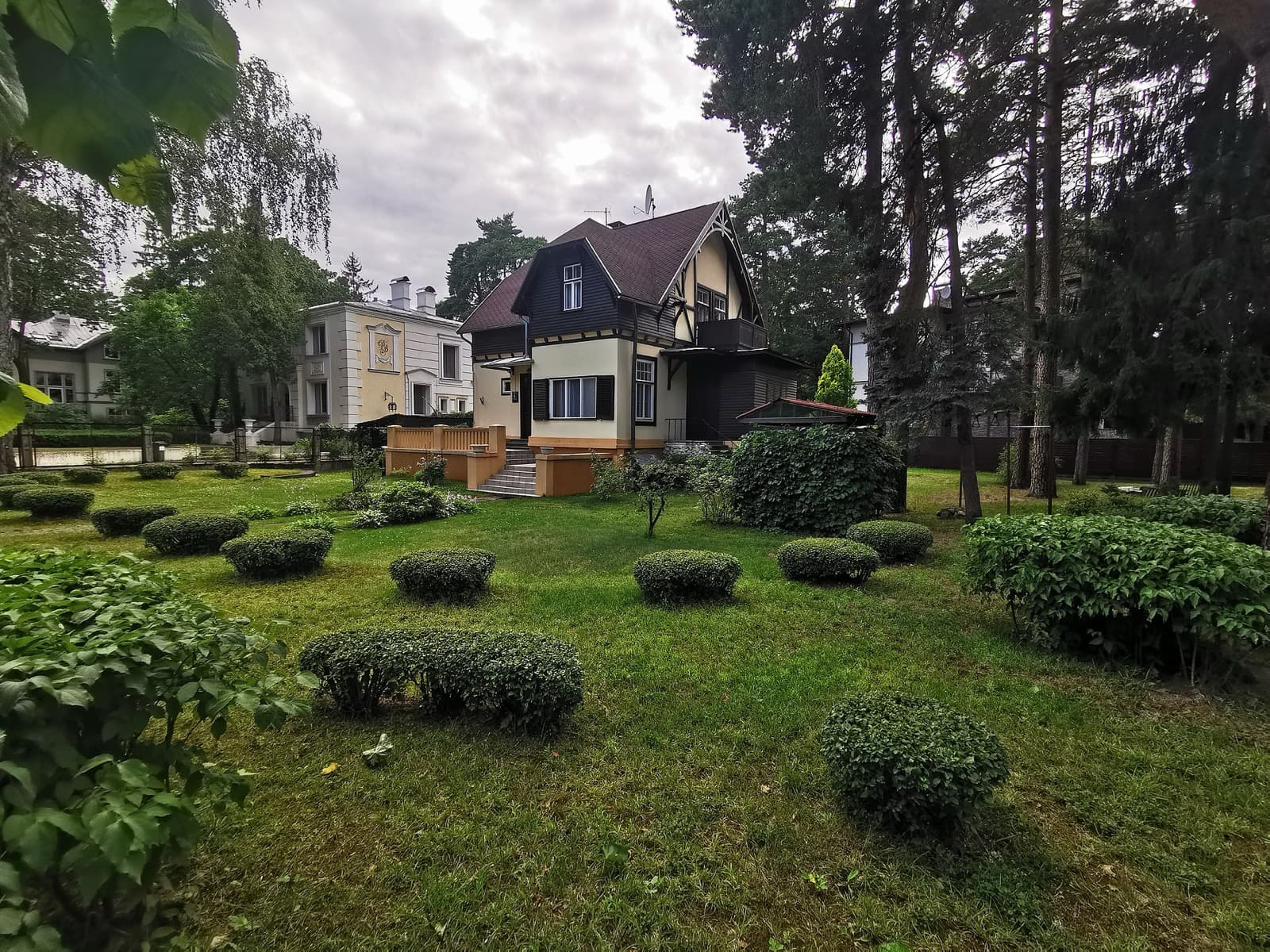
Mežaparks is tree-lined avenues of Art Nouveau and Eclectic-style villas on generous plots, laid out from 1901 as one of Europe's first purpose-built garden suburbs, originally Kaiserwald. It backs onto the 424-hectare pine forest of the Mežaparks park and the shore of Lake Ķīšezers. It is calm, manicured, prosperous and unusually spread out for Riga.
Only around 4,457 people live here: established wealthy families, professionals, long-term villa owners and some diplomats who want green, quiet and room. It is one of the wealthiest corners of the city and feels it.
The honest caveat is that all this greenery comes at the cost of everyday convenience: there is very little among the villas to walk to, so daily life runs on the car and the tram.
Who lives here, and what the streets look like
The residents are settled and well-off: families in the big houses, professionals, long-term owners and a diplomatic sprinkling. It is quiet, private and green rather than social and street-facing.
The streetscape is villas and trees. Grand houses sit back on leafy plots along wide avenues, the pine forest and the lake edge the district, and the density is low enough that neighbours are spaced out. It is beautiful and restful, and short on the corner-shop bustle of the inner districts.
Getting around
Tram 11 runs from the centre straight out to Mežaparks and the zoo, and it is the district's transit lifeline. Beyond it, Mežaparks is car-oriented: the low density and the big distances between villas make walking to services impractical. It trades convenience for calm, and residents accept the deal.
Typical weekday minutes from Mežaparks, with the icon showing how. Times are indicative for a typical weekday morning, measured from the neighborhood centre; the icon shows the fastest sensible way. Minutes were measured with the Google Routes API for a typical weekday around 08:00., 2026-08.
Daily life
Everyday shopping on foot is weak. There are very few shops among the villas, so residents drive or take the tram for groceries; a small shop and café cluster handles day-to-day top-ups, but the nearest real supermarkets are a ride away. For food delivery, Wolt and Bolt Food both serve the district, though density is thinner here than in the central districts.
Local Places Worth Knowing
Independent and close by, chosen on merit. Nobody pays to appear here.
Founded in 1912 on the Ķīšezers shore in the Mežaparks forest, the district's best-known attraction.
A long-standing lakeside restaurant on the Ķīšezers waterfront in Mežaparks, terrace dining over the water in summer.
The seasonal café by the Mežaparks lake beach on Ķīšezers, coffee and light food in the warm months.
A café and restaurant on the Roberta Feldmaņa iela, by the park. 4.1 on Google across 2,146 reviews.
Checked August 2026. Places close and change, so tell us if something here is out of date.
Schools and families
Mežaparks is a green, spacious place to raise children, with the forest, the lake, the zoo and an amusement park on the doorstep, but it has no top-ranked gymnasium of its own, so families look to the central and Pārdaugava schools. Latvia does publish a per-school ranking from centralised-exam results (the Draudzīgā aicinājuma fonds ranking on konkurss.lv), but the top gymnasiums are selective and sit in other districts, so there is no honest Mežaparks number to give yet. It is the sort of gap we would rather flag than fill, which is part of why we build these Rīga guides the way we do. Check the specific schools and their admission before you sign a lease or purchase.
Kids Friendly. Forest, lake, the zoo and an amusement park on the doorstep make it a green, spacious place to raise children, though everyday errands mean a drive or a tram ride.
Pet Friendly. The forest park, the lakeshore and quiet villa streets make it arguably Riga's best district for dogs, and dogs ride the tram.
Green space, leisure and eating out
This is the city's leisure lung. The Mežaparks park offers pine forest, dunes and walking and cycling trails; Lake Ķīšezers adds swimming, boating and water sports; and the district holds Riga Zoo, an amusement park and the open-air Great Bandstand that stages the Song and Dance Festival finale. Fixed independent restaurants are few among the villas, so eating out leans on the seasonal lakeside and park cafés and a trip into town.
What it costs
Mežaparks is premium. Apartments run about 2 800 EUR / m² ≈ $300 / sq ft on the aggregator estimates, and the detached villas trade well above that, against a city average near €1,800 per square metre. Rentals are thin and mostly owner-occupied villas, so where apartments do rent, expect the upper city band; we show a premium-limited-supply guide of roughly 850 EUR / mo for a one-bed rather than a Mežaparks-specific figure.
Weather and climate
Seasonal averages for Rīga, one representative month per season. LVĢMC 1991-2020 normals (Riga) via Wikipedia climate box.
The honest downsides
It is genuinely poor for car-free daily life. Groceries and services mean a drive or a tram ride, not a five-minute walk, so a car makes life here much easier.
It is among the priciest districts to buy. Large villas and limited, competitive supply keep prices at the top of the city, and value-for-money is not the point here.
Crime and safety
Mežaparks is among the calmest-feeling districts in Riga, low-density, affluent and quiet. Latvia publishes crime only nationally and by city, with no per-district rate. The national homicide rate is the EU's highest but concentrates in at-risk groups rather than street crime, and the everyday risk in a leafy villa district like this is minimal.
Is this you?
If you want forest, lake and prestige and are happy to drive for the shopping, Mežaparks is the greenest, most exclusive address in Riga. If you want the same calm and greenery but with services on foot and a lower price, Teika gives you a leafy family grid with local grocers and quicker links to the centre.
Want to know what homes here are actually worth?
Join the waitlistHow we source this
How we put this together. Gathered on the ground by our local field team and written up by the Apraiz research team. Every figure above carries its own source and date. The scores are not computed by the build; walking and transport will use open map and transit data first, then Apraiz's own model. We update prices quarterly, transport and amenities twice a year, and school data when the source publishes.
Sources: Wikipedia, Investropa, europropertydata, Rīgas Nacionālais zooloģiskais dārzs, Central Statistical Bureau (CSP).
Safety and crime in Rīga →Nearby: Vecrīga · Centrs · Āgenskalns