
Long Story ShortReadHide
- What it is: Copenhagen's historic inner city inside the Lakes and the harbour, the medieval core with Stroget, the royal quarter and Nyhavn.
- Who it suits: couples and professionals who want to live in the middle of everything, walk everywhere, and do not mind tourists.
- What it costs: the dearest quarter in the city; no separate figure is published, so we show the Copenhagen owner-flat average of about 55,000 kr per m², and the centre sits well above it.
- What people complain about: tourist crowds and price, and little green or family infrastructure inside the core.
First impressions
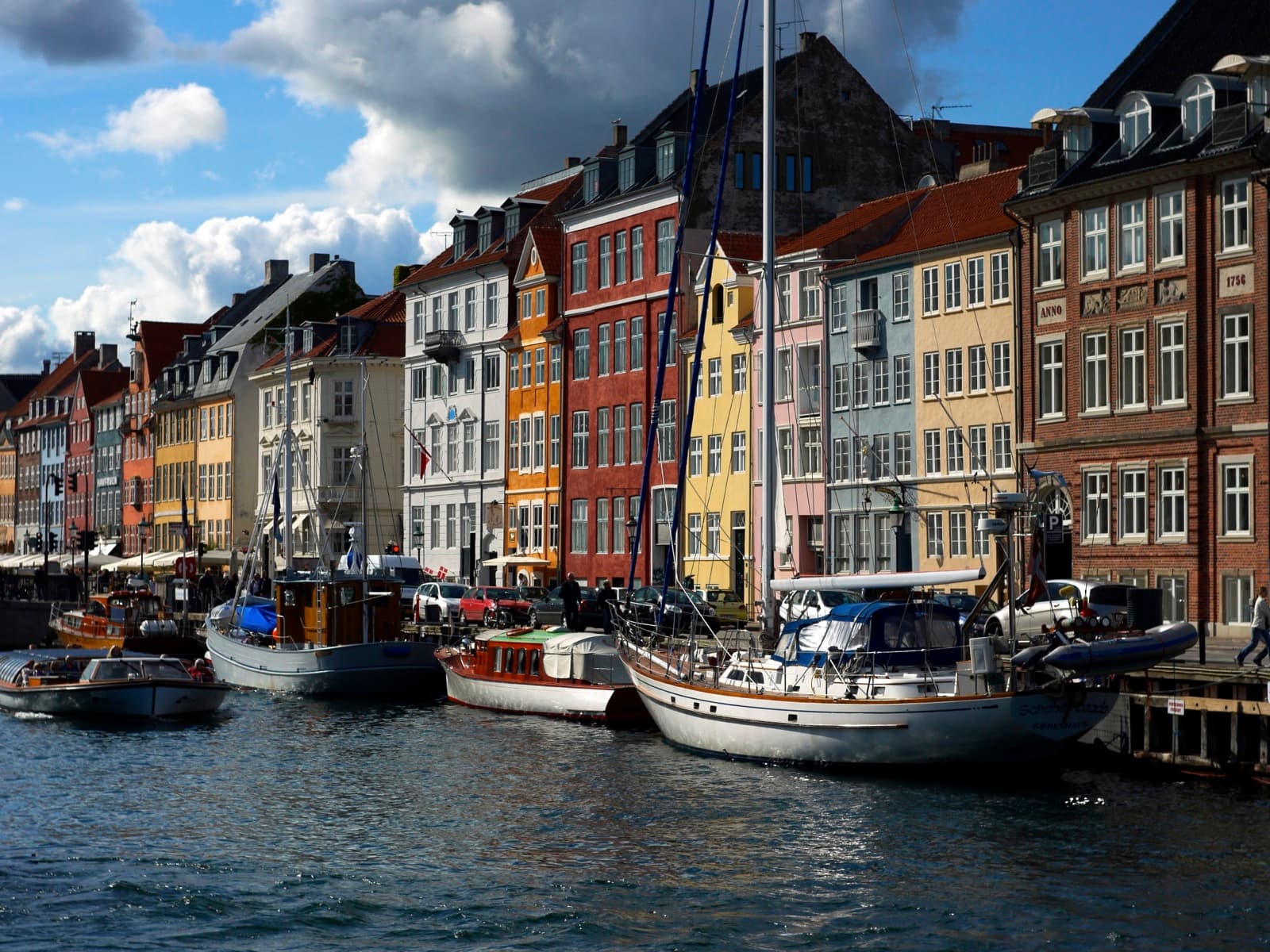
Indre By is Copenhagen's historic heart, the ground inside the Lakes and the harbour channel where the city began. It is the medieval town, Middelalderbyen, with the pedestrian spine of Stroget running through it, the royal Frederiksstaden quarter to the north, the government island of Slotsholmen, and the painted harbour of Nyhavn at its eastern edge. It is flat, compact and built to be walked.
It is historic, central and polished, the city's shopping, sightseeing and museum core, and the most expensive place to buy or rent.
This is the middle of Copenhagen, and it lives at a walking pace with a year-round visitor crowd.
Who lives here, and what the streets look like
Indre By is a mixed, mostly adult centre, young professionals and older residents in the flats above the shops alongside a broad age range, rather than a family enclave; the family housing and school catchments sit out on the bridges and in Østerbro and Valby. It is a place people live to be in the middle of things.
The streetscape is the old grid: flat, narrow lanes and squares, the pedestrian run of Stroget, the royal gardens and the gabled houses of Nyhavn on the water. It is easy to walk and busy all year.
Getting around
Indre By is a walking centre with the country's busiest transport hub inside it. Norreport, where the S-tog, the Metro and regional trains all meet, is Denmark's busiest station, the Cityring Metro (M3) loops the district, and harbour buses run the waterfront, so almost everything is a few minutes on foot or one Metro hop. Copenhagen Airport is a direct Metro ride of about a quarter of an hour from Kongens Nytorv.
Typical weekday minutes from Norreport St, with the icon showing how. Times via Google Routes API for a typical weekday around 08:00, measured from the neighborhood centre; the icon shows the fastest sensible way (walk, bike, transit or car)., 2026-08.
Daily life
Day to day, Indre By is Stroget and Torvehallerne. The core leans to smaller-format grocers, a Netto, a Coop 365 and a Meny, with the glass market halls at Israels Plads for fresh food, and the shopping is Stroget and its side lanes, mixing global flagships with Danish design. For food delivery, Wolt and Just Eat both cover Copenhagen.
Local Places Worth Knowing
Independent and close by, chosen on merit. Nobody pays to appear here. Links are being confirmed.
A classic basement smorrebrod house on Hauser Plads, serving open sandwiches and aquavit since 1877.
An independent coffee bar and cardamom-bun spot beside the main library on Krystalgade.
Christian IV's 1642 round tower with its spiral ramp and rooftop observatory, at the heart of the medieval grid.
The twin glass market halls at Israels Plads with around 60 stalls of fresh produce, fish and prepared food, opened in 2011.
View on Google MapsChecked August 2026. Places close and change, so tell us if something here is out of date.
Schools and families
Indre By is a central quarter rather than a family suburb, though it has several folkeskoler, among them Nyboder Skole and Solvgades Skole, plus many private and international options. Denmark publishes leaving results, the afgangskarakterer, through the Borne- og Undervisningsministeriet, but not at a per-district grain, so we do not rate schools here. Copenhagen has broadly free school choice, so it is worth checking admission before you sign a lease or purchase.
Kids Restricted. Walkable, flat and full of sights, with Kongens Have, the Botanical Garden and Tivoli close, but the city's busiest tourist-and-shopping core; family housing and school catchments concentrate in Østerbro, Valby and the outer bridges.
Pet Restricted. A dense stone city centre with limited private green, but the Lakes promenade, the harbour front and Kongens Have give good on-lead walking; few gardens, and heavy foot traffic through the day.
Green space, leisure and eating out
Indre By's outdoors is the royal gardens and the water. Kongens Have, Denmark's oldest royal garden with Rosenborg Castle, and the Botanical Garden give green inside the grid, the Lakes edge it to the west, and Nyhavn and the harbour baths are the social waterfront, with Tivoli on the south-western corner. Eating out runs from the smorrebrod houses to a dense line of museums and restaurants, and the district holds much of the city's fine dining.
What it costs
Indre By is the historic, most sought-after quarter, so it prices well above the city average. No Indre By-specific sale price is published, so we show the Copenhagen owner-flat average of about 55 000 DKK / m² (about €7,400 / m²) ≈ $790 / sq ft (Boligsiden and Finans Danmark, second quarter of 2026), and the centre sits well above it. Rent here is largely set by the market rather than the older regulated system, and Denmark does not publish a per-city 2-room figure, so we show a market asking level of around 12 000 DKK / mo (about €1,600 / mo) (BoligPortal, 2026) as a guide; much older stock is rent-regulated and cheaper.
Weather and climate
Seasonal averages for Copenhagen, one representative month per season. DMI normals (Copenhagen) via Wikipedia climate box.
The honest downsides
Tourist load and price. As the most visited quarter in the country, Indre By is crowded and loud in season, especially around Stroget and Nyhavn, and it is the dearest place in Copenhagen to buy or rent.
Little in-core green or family infrastructure. The dense historic grid has scarce private gardens and few family schools inside it, so families rely on green space and catchments out on the bridges; it suits couples and professionals more than young children.
Crime and safety
As the city's concentrated centre for shopping, nightlife and tourism, Indre By naturally records more pickpocketing and public-order incidents than the quiet residential bridges, typical of a busy capital core rather than reflecting a uniquely unsafe neighborhood, and Denmark does not publish neighborhood-level crime figures, so there is no local number. Denmark has high police-reporting trust, so the city-wide figures track real incidence closely. The fuller Copenhagen picture is on the city safety page.
Is this you?
If you want to live in the middle of Copenhagen, on a flat medieval grid with the shopping street, the royal gardens and the harbour all at hand, and you take the crowds and the price as part of the deal, Indre By is the heart of the city. If you want a garden, quiet and a school at the corner, the bridges and the outer districts will suit you better.
Want to know what homes here are actually worth?
Join the waitlistHow we source this
How we put this together. Gathered on the ground by our local field team and written up by the Apraiz research team. Every figure above carries its own source and date. The scores are not computed by the build; walking and transport will use open map and transit data first, then Apraiz's own model. We update prices quarterly, transport and amenities twice a year, and school data when the source publishes.
Sources: Boligsiden / Finans Danmark Boligmarkedsstatistik, BoligPortal market listings, Wikipedia, Danmarks Statistik, table STRAF11.
Safety and crime in Copenhagen →