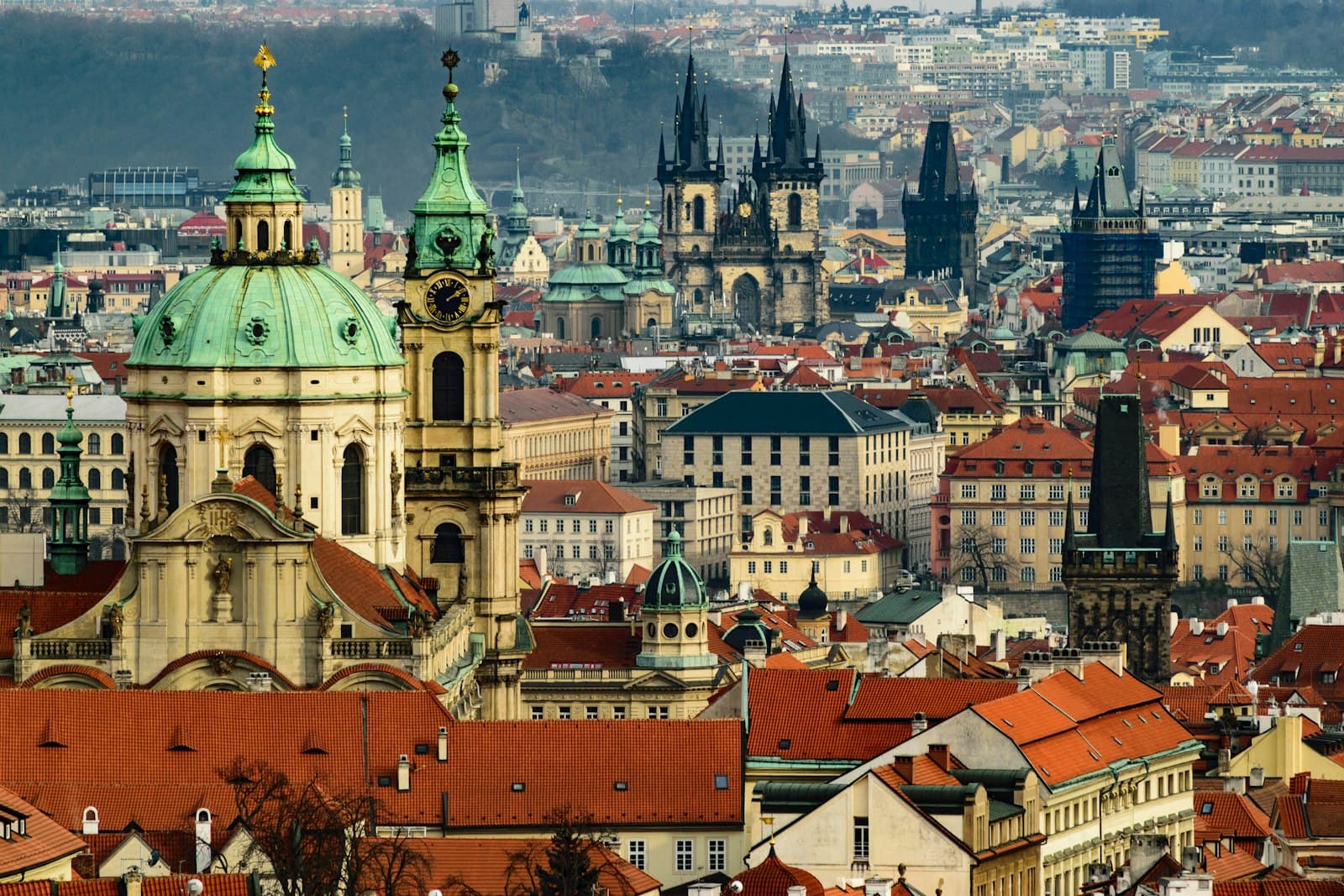
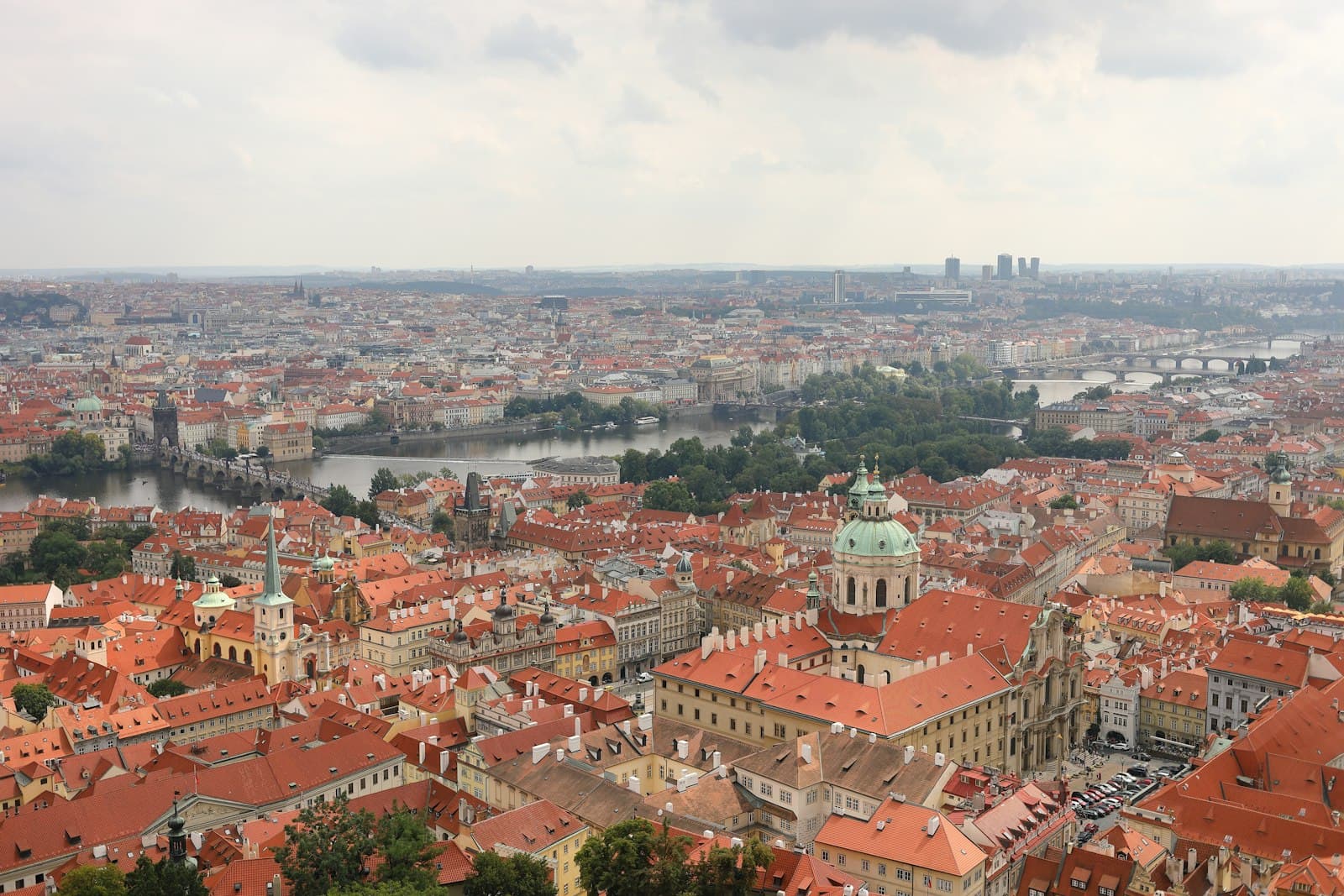
The best neighbourhoods in Prague for families and first-time buyers
Eight Prague neighborhoods for families and first-time buyers: who each suits, schools, metro and trams, parks, the official price level and the honest downsides.
On this page6
The best neighborhoods in Prague for families are the green, well-connected districts with good schools and a park nearby: Vinohrady, Karlín, Dejvice and Břevnov. For first-time buyers the sweet spots are Žižkov and Vršovice next to Vinohrady, and Holešovice and Smíchov on either side of the river, all with more character than price. The Old Town is lovely to visit and hard to live in.
Each area below gets the same treatment: who it suits, schools, transport, parks, the honest downsides, and one well-reviewed independent local spot we checked on Google Maps. What it does not get is a price per square meter of its own, because no official one exists. More on that just below. For the full price picture, see property prices in Prague.
How much does a flat cost in Prague?
The official answer comes from the Czech Statistical Office, which works from land-registry records of what buyers actually paid. Its Prague release of 6 May 2026 opens: "Průměrná kupní cena bytů v Praze byla v roce 2024 na úrovni 115 889 Kč za metr čtvereční." That is an average purchase price of CZK 115,889 per m² for flats in 2024, about €4,762 at the ECB rate of 10 November 2026.
Prague is the most expensive place in the country by some margin: 82% above the Czech average, with Brno-město second at CZK 88,333 (about €3,630). Prices rose 8.5% on 2023, and 154% from 2015 to 2024. The same release explains why there is no figure for Vinohrady or Žižkov: the data "neslouží k vytváření detailních cenových map na úrovni nižších územních celků", it is not meant for detailed price maps below city level. So any per-district number you see on a portal is somebody's asking-price estimate, not an official statistic.
Treat the city-wide number as a starting point only. A renovated flat in a central district and a flat in an outer housing estate are both inside that average, so compare recent sales on the street you want before you trust any figure.
How do schools work in Prague?
Czech primary schools are assigned by catchment, the spádová škola. Prague sets the catchments of the city districts' schools in a citywide decree, no. 5/2025 Sb., and each district runs its own enrollment. As the Praha 8 school office's enrollment notice puts it, directors of catchment schools must admit children with permanent residence in that catchment first.
Under the Education Act, parents enroll a child between 15 January and 15 February of the year school starts, and school starts the September after the child turns six. Two practical points for movers: the catchment follows your permanent residence, and districts may verify it, so register the address as soon as you move. And popular schools publish their own criteria for children from outside the catchment, so read them before you fall for a flat.
Which Prague neighborhoods suit first-time buyers?
Žižkov: the hill with a pub on every corner
Žižkov, in Prague 3, is the hilly old working-class district under the television tower. It is famous for having more pubs per head than anywhere else in the city, a claim that gets repeated far more often than it gets checked. The flats are older and often less renovated than next door in Vinohrady, which is the point.
- Who it suits: first-time buyers who want the inner city, a lively street life and a bit of grit.
- Schools: several district primaries run by Prague 3; check the catchment for your street on the district's site.
- Transport: trams along the main streets, with metro line A at Jiřího z Poděbrad and Flora on the southern edge and the main railway station a short walk west. Routes are on the DPP site.
- Parks: Vítkov hill with the National Memorial, Parukářka, and Riegrovy sady across the border in Vinohrady.
- Downsides: steep streets, noise around the bars, and building quality that swings a lot from one house to the next.
- Local spot: Žižkavárna on Kubelíkova, a café rated 4.6 from 1,190 reviews.
Vršovice: Vinohrady's quieter neighbor
Vršovice, in Prague 10, sits just south-east of Vinohrady and shares a lot of its Art Nouveau and interwar housing, at a lower profile. Krymská street has become one of the city's best small bar and café strips, and the local football club, Bohemians, plays in a tiny stadium in the middle of it all.
- Who it suits: first-time buyers and young couples who want Vinohrady's feel without its price tag.
- Schools: Prague 10 runs a large network of primaries; check the catchment for the building you want.
- Transport: trams, including the 22 through the center to the castle, plus the Praha-Vršovice railway station. The nearest metro stops are on the Vinohrady side, so many trips start with a tram.
- Parks: Grébovka (Havlíčkovy sady) with its vineyard on the Vinohrady edge, and Heroldovy sady.
- Downsides: no metro station in the heart of it, busy main roads, and a nightlife strip that is lovely until you live above it.
- Local spot: Café Jen on Kodaňská, rated 4.7 from 1,560 reviews.
Holešovice: the converted riverside
Holešovice, in Prague 7, is wrapped in a bend of the Vltava, with Letná park on the hill above and Stromovka, the city's big royal park, to the north. Old factories and warehouses have become galleries, offices and flats, and the old slaughterhouse is now the Holešovice market.
- Who it suits: first-time buyers who want new or converted flats close to the center, and creative types who like a gallery with their coffee.
- Schools: Prague 7 primaries for each catchment; the district is growing, so ask about capacity.
- Transport: metro line C at Vltavská and Nádraží Holešovice, the Praha-Holešovice railway station, and trams into the Old Town in minutes.
- Parks: Letná park, Stromovka and the riverside paths toward Troja and the zoo.
- Downsides: a lot of building work, some bleak stretches near the rail lines, and new-build prices that can feel steep for the setting.
- Local spot: Kafe Francin on Dukelských hrdinů, a coffee shop rated 4.6 from 1,672 reviews.
Smíchov: the transport hub with a brewery
Smíchov, in Prague 5, is the busy district across the river from the New Town, centered on Anděl. It mixes old tenements, the Staropramen brewery, a shopping center and new offices, and it is one of the best-connected places in the city.
- Who it suits: first-time buyers who commute, and anyone who wants everything within a ten-minute walk.
- Schools: Prague 5 runs the primaries; there are several within the district, and quieter options up the hill.
- Transport: metro line B at Anděl and Smíchovské nádraží, the Praha-Smíchov railway station, and one of the city's busiest tram junctions at Anděl.
- Parks: Kinského zahrada and Petřín hill above, and Dětský ostrov, a river island with a playground.
- Downsides: traffic and crowds around Anděl, and a very mixed stock, from riverside conversions to tired blocks, so prices vary widely within it.
- Local spot: 55 Bakery on Štefánikova, rated 4.7 from 250 reviews.
Which Prague neighborhoods are best for families?
Vinohrady: the one everyone wants
Vinohrady, split between Prague 2 and Prague 3, is the elegant late-1800s district east of Wenceslas Square: tall apartment buildings with ornate facades, tree-lined streets, squares with farmers' markets, and two big parks. It is the default answer when anyone asks where to live in Prague, and the prices know it.
- Who it suits: families who want an inner-city flat with parks and playgrounds, and buyers with a comfortable budget.
- Schools: dense school provision across Prague 2 and 3, with popular schools that fill early. Check which district your building is in, since that decides the catchment.
- Transport: metro line A at Náměstí Míru, Jiřího z Poděbrad and Flora, plus trams along Vinohradská and through Náměstí Míru.
- Parks: Riegrovy sady with its city views, Havlíčkovy sady (Grébovka), and the square at Jiřího z Poděbrad.
- Downsides: among the highest prices in the city, few parking spaces, and many older buildings without lifts.
- Local spot: Arte Bianca Bakery & Caffè on Bělehradská, rated 4.9 from 1,621 reviews.
Karlín: rebuilt, renovated and on the metro
Karlín, in Prague 8, was badly hit by the 2002 flood and has been rebuilt into one of the most sought-after districts in the city: a flat grid of renovated apartment buildings, new offices, good restaurants and a riverside. Flat streets are a gift for anyone with a pram.
- Who it suits: families who want a modern, central flat, and professionals working in the offices along Rohanské nábřeží.
- Schools: Prague 8 primaries, with enrollment dates published by each school on the district's site.
- Transport: metro line B at Florenc, Křižíkova and Invalidovna, trams through the main streets, and the Florenc coach station next door.
- Parks: Karlínské náměstí, the riverside at Rohanský ostrov, and Vítkov hill rising behind.
- Downsides: high prices for new and renovated flats, building sites still going, and a flood history worth asking about for any ground-floor flat.
- Local spot: Pekárna Praktika on Sokolovská, a bakery rated 4.7 from 656 reviews.
Dejvice: villas, universities and the airport road
Dejvice, in Prague 6, is the calm, well-kept district north-west of the castle, built around the big roundabout at Vítězné náměstí. It has university campuses, interwar villas on the hills of Hanspaulka and Baba, and the quickest route to the airport.
- Who it suits: families who want quiet streets and green space, and buyers who fly a lot.
- Schools: Prague 6 primaries by catchment. The district is popular, so check capacity and the catchment for your exact address.
- Transport: metro line A at Hradčanská and Dejvická, trams through Vítězné náměstí, and the airport bus from Nádraží Veleslavín, two stops further out on line A.
- Parks: Divoká Šárka nature reserve, Stromovka and Letná to the east, and Hanspaulka's villa gardens.
- Downsides: high prices and a slightly sleepy feel in the evening.
- Local spot: U Borůvky on Kyjevská, a cake shop rated 4.9 from 155 reviews.
Břevnov: a monastery, a game park and tram 22
Břevnov, also in Prague 6, climbs west from the castle along Bělohorská street. It is built around Břevnov Monastery, one of the oldest in the country, and it has the feel of a small town with a tram line through it.
- Who it suits: families who want parks, houses or larger flats and a slower pace, while staying inside the city.
- Schools: Prague 6 primaries by catchment, generally less pressured than central Dejvice.
- Transport: tram 22 along Bělohorská to the castle and the center, and metro line A at Petřiny on the northern edge.
- Parks: Obora Hvězda, a walled former game park, Ladronka, and the monastery gardens.
- Downsides: the tram is the lifeline for many trips, and the hilly side streets are hard work in winter.
- Local spot: 20m2 Espresso bar on Bělohorská, rated 4.8 from 383 reviews.
How do these Prague neighborhoods compare?
| Neighborhood | City district | Nearest metro | Best for |
|---|---|---|---|
| Vinohrady | Prague 2 and 3 | A: Náměstí Míru, Jiřího z Poděbrad | Families with a budget |
| Karlín | Prague 8 | B: Florenc, Křižíkova, Invalidovna | Families, modern flats |
| Dejvice | Prague 6 | A: Hradčanská, Dejvická | Families, airport access |
| Břevnov | Prague 6 | A: Petřiny, plus tram 22 | Families wanting space |
| Holešovice | Prague 7 | C: Vltavská, Nádraží Holešovice | First-time buyers, parks |
| Smíchov | Prague 5 | B: Anděl, Smíchovské nádraží | First-time buyers who commute |
| Žižkov | Prague 3 | A: Jiřího z Poděbrad, Flora (edge) | First-time buyers, nightlife |
| Vršovice | Prague 10 | Tram; metro on the Vinohrady side | First-time buyers, value |
The official price for all of them is the same city figure, CZK 115,889 per m² (about €4,760) in 2024. That is why the comparison is about trade-offs, not a price ranking: there is no honest per-district price to rank by.
How do I judge value in any Prague neighborhood?
A city average tells you whether Prague is in budget. It does not tell you whether one flat is fairly priced. Here the big swing factors are whether you are buying personal ownership or a cooperative share, the floor and lift, the building's condition and the state of its shared fund, all covered in how much is my home worth in Prague. For the general method of choosing where to live, see how to choose the right neighborhood.
If you are moving from abroad, read buying property in Prague from abroad, and if you are trading up, selling your home in Prague. For a local agent, Veted lists reviewed estate agents in Prague. And since nobody publishes an official price per district, that is exactly the gap Apraiz is working on: a free, independent value for any home, so you can check a price against the evidence before you bid.
Common questions
What is the best area in Prague for families?
Vinohrady, Karlín, Dejvice and Břevnov are the usual family picks. Vinohrady has parks and dense school provision, Karlín offers modern flats on flat streets, Dejvice is calm with fast airport access, and Břevnov gives more space with a game park on the doorstep.
Where should first-time buyers look in Prague?
Žižkov and Vršovice, next to Vinohrady, are the classic first-time picks, with older flats and lively streets. Holešovice and Smíchov add good transport and plenty of converted and new-build flats. Compare recent sales street by street, since there is no official price per district.
What is the average price per square meter in Prague?
CZK 115,889 per m² for flats in 2024, about €4,762, according to the Czech Statistical Office's land-registry figures published in May 2026. That is 82% above the Czech average and 8.5% up on 2023. The office does not publish prices for individual Prague districts.
How do I get my child into a school in Prague?
Enroll between 15 January and 15 February of the year your child starts school. The catchment school for your permanent address must admit your child first. You can apply to other schools too, which admit by their own published criteria, so check them before you buy.
Is Vinohrady or Žižkov better to buy in?
Vinohrady is greener, more polished and better served by metro line A, and it costs more. Žižkov is next door, livelier and hillier, with more unrenovated flats, so it usually gives more space for the money. Many people live in one and spend their evenings in the other.