The best neighbourhoods in Berlin for families and first-time buyers
Eight Berlin neighborhoods for families and first-time buyers: who each suits, schools, U-Bahn and S-Bahn, parks, official prices per m² and the honest downsides.
On this page6
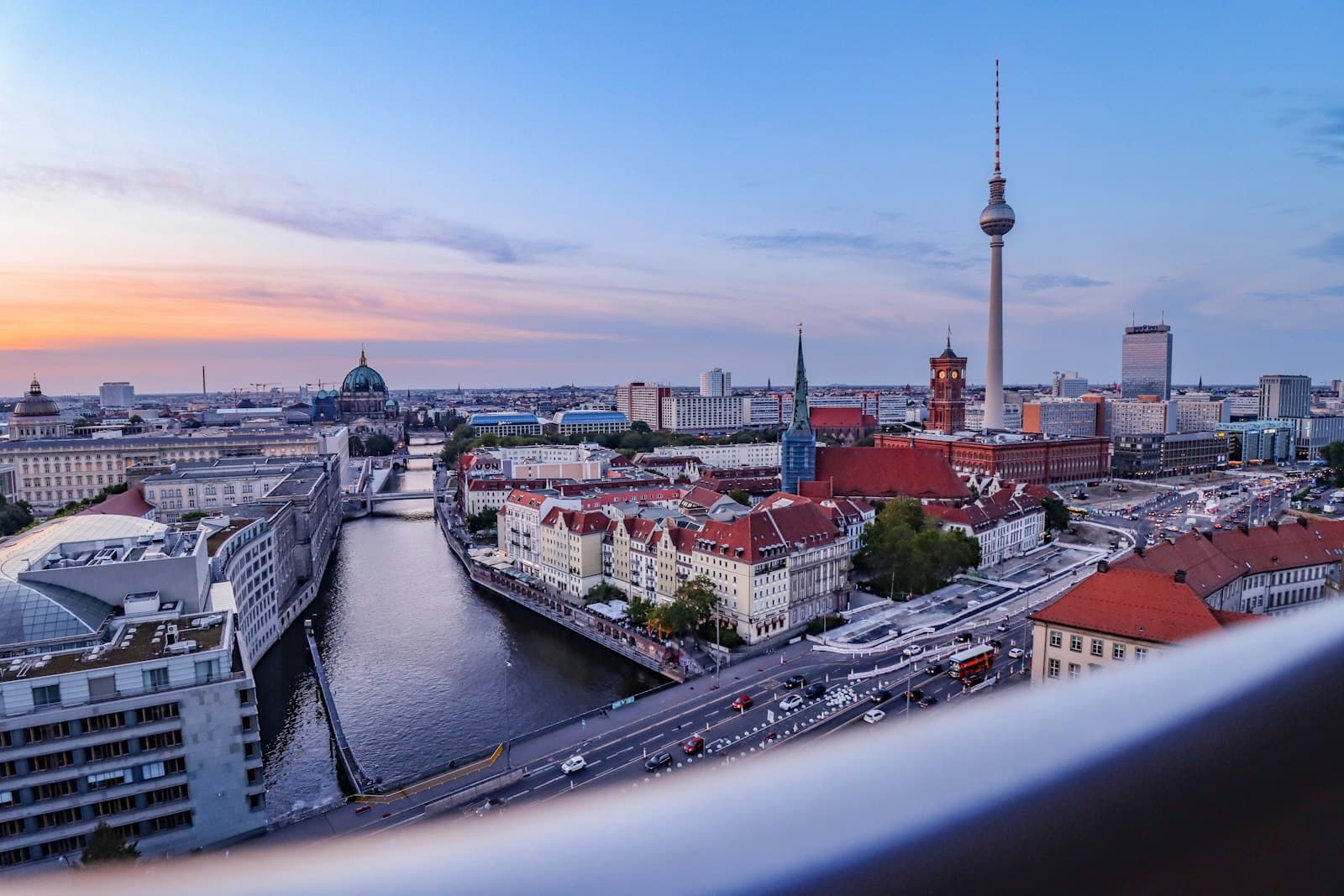
The best neighborhoods in Berlin for families are the leafy, calmer ones with good playgrounds and a fast U-Bahn or S-Bahn line: Prenzlauer Berg, Pankow, Charlottenburg and Steglitz. For first-time buyers the value picks are Wedding and Neukölln, with Friedrichshain and Kreuzberg for those who want the city at full volume. Mitte is the most expensive place to buy, by a distance.
Each area below gets the same treatment: who it suits, schools, transport, parks, an official price level, the honest downsides, and one well-reviewed independent local spot we checked on Google Maps. Prices come from the Immobilienmarktbericht Berlin 2025/2026, the annual report of the Gutachterausschuss, Berlin's official valuation board. It is built from every notarized sale in the city, so these are prices people actually paid, not asking prices on a portal. For the wider picture, see property prices in Berlin.
One thing to know about the board's numbers: its district table uses the old pre-2001 boroughs (Altbezirke). So the Pankow figure covers all of old Pankow, not just the streets around the town hall, and the Neukölln figure is for the old borough as a whole, not only its northern Kiez. Treat each figure as the right ballpark, then check sales street by street.
How are Berlin property prices moving?
Sideways, with more sales. Condominium flats sold in 2025 averaged €5,017 per m² across 11,110 sales in the board's district table, against €4,796 in 2024. Its press release of 31 July 2026 summed up the year in one line: "Die Preise blieben dagegen in nahezu allen Teilmärkten stabil", prices stayed stable in nearly all submarkets, while the number of sales rose sharply (Gutachterausschuss press release). New-build is a different market: the same release puts first sales in new developments at €8,108 per m².
How do schools work in Berlin?
Berlin assigns primary schools by address. According to the city's service page on school registration, "Grundsätzlich melden Sie Ihr Kind immer an der Grundschule oder Gemeinschaftsschule Ihres Einzugsbereichs an": you always register your child at the primary or community school of your catchment area. That is usually the nearest public primary school, and the district school office tells you which one it is.
If you want a different school, you apply for it in writing at registration and give your reasons, but you still register at the catchment school first, even for a private school. For the 2027/2028 school year, children born between 1 October 2020 and 30 September 2021 register between 5 and 16 October 2026, in person. Berlin primary school runs six years, so the catchment decision lasts a long time. Check the catchment for the exact address before you sign, not after.
Which Berlin neighborhoods suit first-time buyers?
Neukölln: the value pick with a runway outside
Northern Neukölln is the old working-class district south of Kreuzberg, now one of the most mixed and lively parts of the city. Turkish bakeries next to natural-wine bars, big Altbau tenements, and on its western edge the old Tempelhof airport, which Berlin simply turned into a park.
- Who it suits: first-time buyers who want inner-city life at the lowest price in this list's inner ring, and couples who do not mind noise.
- Schools: many public primaries, with results that vary a lot between catchments. Check the catchment school for the exact building before you bid.
- Transport: the U7 through Karl-Marx-Straße and Rathaus Neukölln, the U8 through Hermannplatz, Boddinstraße and Leinestraße, and the S-Bahn ring at Neukölln and Hermannstraße. Timetables are on the BVG site.
- Parks: Tempelhofer Feld, Volkspark Hasenheide and the small, formal Körnerpark.
- Price level: €4,425 per m² for old Neukölln in 2025, from 500 sales, about 12% below the Berlin average.
- Downsides: busy and loud around Hermannplatz and Sonnenallee, uneven building quality, and a wide price range that hides big street-by-street differences.
- Local spot: Le Brot on Fuldastraße, a bakery rated 4.7 from 532 reviews.
Wedding: the one everyone says is next
Wedding, north of Mitte, has been "about to take off" for roughly twenty years, which is exactly why it is still affordable. It has canals, two big parks, a lake you can swim in, and a very short ride into the center.
- Who it suits: first-time buyers who want central access at outer-ring prices, and people who like a neighborhood that is not trying too hard.
- Schools: a dense network of public primaries; as with Neukölln, results differ by catchment, so look up the one for your address.
- Transport: the U6 through Wedding, Leopoldplatz and Seestraße, the U9 through Leopoldplatz and Osloer Straße, and the S-Bahn ring at Wedding and Gesundbrunnen, where long-distance trains also stop.
- Parks: Volkspark Humboldthain, Volkspark Rehberge, and the Plötzensee lake with its beach.
- Price level: €4,197 per m² for old Wedding in 2025, from 307 sales, the lowest figure in this guide.
- Downsides: some rough-edged streets around Leopoldplatz, fewer restaurants than Kreuzberg or Prenzlauer Berg, and the "next big thing" may stay next for a while yet.
- Local spot: Kairos Cafe on Torfstraße, rated 4.9 from 315 reviews.
Friedrichshain: the East Side, fully awake
Friedrichshain, across the Spree from Kreuzberg, mixes grand Stalin-era boulevards on Karl-Marx-Allee with the cobbled Altbau streets around Boxhagener Platz. It is young, well connected and busy on weekends, when its Saturday market and its clubs both fill up.
- Who it suits: first-time buyers and young couples who want nightlife, cafés and a short commute.
- Schools: public primaries spread across the district; older children often head to schools in neighboring districts, so check commutes as well as catchments.
- Transport: the U5 through Weberwiese, Frankfurter Tor and Samariterstraße, the U1 and U3 at Warschauer Straße, and the S-Bahn at Warschauer Straße and Ostkreuz, one of the city's biggest interchanges. See the S-Bahn Berlin site for lines.
- Parks: Volkspark Friedrichshain, the oldest public park in Berlin, plus the Spree banks and Boxhagener Platz.
- Price level: €5,887 per m² in 2025, from 832 sales, slightly down on 2024's €5,957.
- Downsides: weekend noise near the clubs and the RAW grounds, and a price level that is now well above the Berlin average.
- Local spot: Fröhliche Bäckerei on Rigaer Straße, a bakery rated 4.7 from 1,753 reviews.
Kreuzberg: canals, markets and very few sellers
Kreuzberg needs little introduction: the Landwehr Canal, Turkish markets, Bergmannstraße, and an outsized share of Berlin's cultural life. The western half around Viktoriapark is calmer and grander; the eastern half around Kottbusser Tor is louder and more mixed.
- Who it suits: buyers who want the Berlin they saw in films, and young families happy in a flat with a courtyard.
- Schools: public primaries in every Kiez; the catchment decides which one is yours, so check it for the exact address.
- Transport: the U1 and U3 through Kottbusser Tor, Görlitzer Bahnhof and Schlesisches Tor, the U8 at Kottbusser Tor, and the U6 and U7 at Mehringdamm.
- Parks: Viktoriapark with its hilltop monument, Park am Gleisdreieck, Görlitzer Park and the canal banks.
- Price level: €5,647 per m² in 2025, from only 458 sales, a sign of how few flats here change hands.
- Downsides: thin supply, tourist crowds in summer, and some hotspots around Görlitzer Park and Kottbusser Tor that are not for everyone.
- Local spot: Chapter One Coffee on Mittenwalder Straße, a coffee shop rated 4.6 from 1,032 reviews.
Which Berlin neighborhoods are best for families?
Prenzlauer Berg: the famous pram district
Prenzlauer Berg came through the war with most of its nineteenth-century tenements standing, and it has the high ceilings, leafy squares and playgrounds to show for it. Its reputation as the pram capital of Germany is a joke Berliners make often, and they are not wrong.
- Who it suits: families who want an inner-city flat with playgrounds on every square, and buyers with a healthy budget.
- Schools: many public primaries within walking distance, though popular ones are oversubscribed. Register at the catchment school and ask early about the one you want.
- Transport: the U2 through Senefelderplatz, Eberswalder Straße and Schönhauser Allee, the S-Bahn ring at Schönhauser Allee, Prenzlauer Allee and Greifswalder Straße, and the M1, M2 and M10 trams.
- Parks: Mauerpark with its Sunday flea market, the Kollwitzplatz and Helmholtzplatz squares, and Volkspark Friedrichshain on its southern edge.
- Price level: €6,300 per m² in 2025, from 663 sales, about 26% above the Berlin average.
- Downsides: the highest price in this guide, lots of fifth-floor walk-ups without lifts, and a less mixed population than it had twenty years ago.
- Local spot: Siebert Bakery on Schönfließer Straße, rated 4.7 from 1,896 reviews.
Pankow: Prenzlauer Berg's calmer older sibling
Old Pankow, just north of Prenzlauer Berg, feels like a small town that happens to be on the U-Bahn. Villas and low apartment blocks, a palace garden, and a high street where people still know the baker. It also stretches a long way north into almost rural edges, which is worth knowing when you read the average.
- Who it suits: families who want space, gardens and quiet while keeping a straight line into the center.
- Schools: a good spread of public primaries; the district is growing, so ask the district school office about capacity in your catchment.
- Transport: the U2 ends at Pankow, which also has the S2 and S8, and the M1 tram runs through the center.
- Parks: Bürgerpark Pankow, Schlosspark Schönhausen and the green banks of the Panke stream.
- Price level: €5,194 per m² for old Pankow in 2025, from 540 sales, up sharply on 2024's €4,415.
- Downsides: quiet evenings, a longer ride than the inner districts, and an average that blends central Pankow with far cheaper outer edges.
- Local spot: Stück vom Glück on Wilhelm-Kuhr-Straße, a café rated 4.6 from 979 reviews.
Charlottenburg: the grown-up West
Charlottenburg is classic West Berlin: wide streets of grand apartment buildings, the palace and its gardens, and Kantstraße's restaurants. It is calm and settled, and it has the deepest pool of flat sales of any area in this guide, which makes its average the most reliable here.
- Who it suits: families and established buyers who want big Altbau flats, good shops and a quieter pace than the East.
- Schools: a long-established network of public primaries; secondary schools are chosen separately after grade six.
- Transport: the U2 through Sophie-Charlotte-Platz, Bismarckstraße and Ernst-Reuter-Platz, the U7 through Richard-Wagner-Platz and Wilmersdorfer Straße, and the S-Bahn at Charlottenburg and Savignyplatz.
- Parks: the Charlottenburg palace gardens, the Lietzensee lake park, and the Tiergarten a short ride east.
- Price level: €5,201 per m² in 2025, from 936 sales, only about 4% above the Berlin average.
- Downsides: less nightlife, some heavy traffic on the big roads, and an older crowd than the East, which suits some families and bores others.
- Local spot: Der Kuchenladen on Kantstraße, a cake shop rated 4.7 from 1,343 reviews.
Steglitz: the southwest suburb with a shopping street
Old Steglitz, in the southwest, is where many Berlin families end up after the second child. It has the Schloßstraße shopping street, quiet residential streets running off it, and garden suburbs like Lichterfelde further out.
- Who it suits: families who want more space for the money, a garden or a balcony, and a direct line into town.
- Schools: plenty of public primaries and a calmer, more suburban school environment. Check the catchment as everywhere.
- Transport: the U9 ends at Rathaus Steglitz, which is also on the S1, with further S1 stops at Botanischer Garten and Lichterfelde West.
- Parks: Stadtpark Steglitz, the Botanic Garden at Lichterfelde, and the Grunewald forest within reach.
- Price level: €4,390 per m² for old Steglitz in 2025, from 712 sales, flat on 2024.
- Downsides: suburban evenings, a longer commute to the East, and a car-friendly layout in the outer parts.
- Local spot: Konditorei Rabien on Klingsorstraße, a pastry shop rated 4.7 from 1,708 reviews.
How do these Berlin neighborhoods compare on price?
| Neighborhood | Board's area | € per m², 2025 | Sales, 2025 |
|---|---|---|---|
| Prenzlauer Berg | Prenzlauer Berg | 6,300 | 663 |
| Friedrichshain | Friedrichshain | 5,887 | 832 |
| Kreuzberg | Kreuzberg | 5,647 | 458 |
| Charlottenburg | Charlottenburg | 5,201 | 936 |
| Pankow | Pankow (old borough) | 5,194 | 540 |
| Neukölln | Neukölln (old borough) | 4,425 | 500 |
| Steglitz | Steglitz (old borough) | 4,390 | 712 |
| Wedding | Wedding (old borough) | 4,197 | 307 |
| Berlin, all areas | 5,017 | 11,110 |
For comparison, Mitte topped the table at €9,374 per m², pulled up by new-build around the government quarter, and the cheapest old boroughs were Spandau and Marzahn at about €3,200 to €3,400.
How do I judge value in any Berlin neighborhood?
A district average tells you whether an area is in budget. It does not tell you whether one flat is fairly priced. In Berlin the big swing factors are whether the flat is Altbau or new-build, the floor and lift, the state of the building's shared reserves, and whether it is let to a tenant, all covered in how much is my home worth in Berlin. For the general method of choosing where to live, see how to choose the right neighborhood.
If you are moving from abroad, read buying property in Berlin from abroad first; if you already own and are trading up, selling your home in Berlin covers the other side. To find an agent, Veted's list of estate agents in Berlin shows reviewed firms in the city. And Apraiz is building the missing piece for buyers: a free, independent value for any home, so you can check a price against the evidence before you bid.
Common questions
What is the best area in Berlin for families?
Prenzlauer Berg, Pankow, Charlottenburg and Steglitz are the usual family picks. Prenzlauer Berg has playgrounds on every square but the highest prices; Pankow and Steglitz give more space for less money; Charlottenburg offers big Altbau flats and a calm, settled feel in the West.
Where should first-time buyers look in Berlin?
Wedding and Neukölln are the value picks, at €4,197 and €4,425 per m² in 2025 according to the Gutachterausschuss. Friedrichshain and Kreuzberg cost more, at about €5,600 to €5,900, but put you in the middle of the city's nightlife and café scene.
What is the most expensive neighborhood in Berlin?
Mitte, at an average of €9,374 per m² for flats sold in 2025, per the Gutachterausschuss. Its range is very wide, from about €3,500 to almost €16,000, because new-build near the government quarter pulls the average up. Among the areas in this guide, Prenzlauer Berg is the most expensive at €6,300.
Can I choose my child's primary school in Berlin?
Partly. You must first register at the public primary school of your catchment area, which the district school office assigns by address. You can apply in writing for a different school at the same time, giving your reasons, but popular schools are often full, so check the catchment before you buy.
Are Berlin property prices falling?
Not really. The Gutachterausschuss reported that prices stayed stable in nearly all submarkets in 2025, while the number of sales rose. Flats averaged €5,017 per m² in its district table, up from €4,796 in 2024, with some areas, like Friedrichshain, slightly down.