
Long Story ShortReadHide
- What it is: a living residential district set inside a vast, almost fully intact early-19th-century star fortress, ramparts, gates and yellow-brick barracks now home to residents and to the Mark Rothko Art Centre, in the town where Rothko was born.
- Who it suits: people who want quiet, space and genuine heritage on the cheap, are comfortable in a Russian-speaking city, and do not need shops and services on every corner.
- What it costs: among Latvia's cheapest stock, roughly 767 EUR / m² ≈ $80 / sq ft to buy.
- What people complain about: uneven upkeep, thin everyday retail inside the walls, and the city's wider distance from Riga and shrinking population.
First impressions
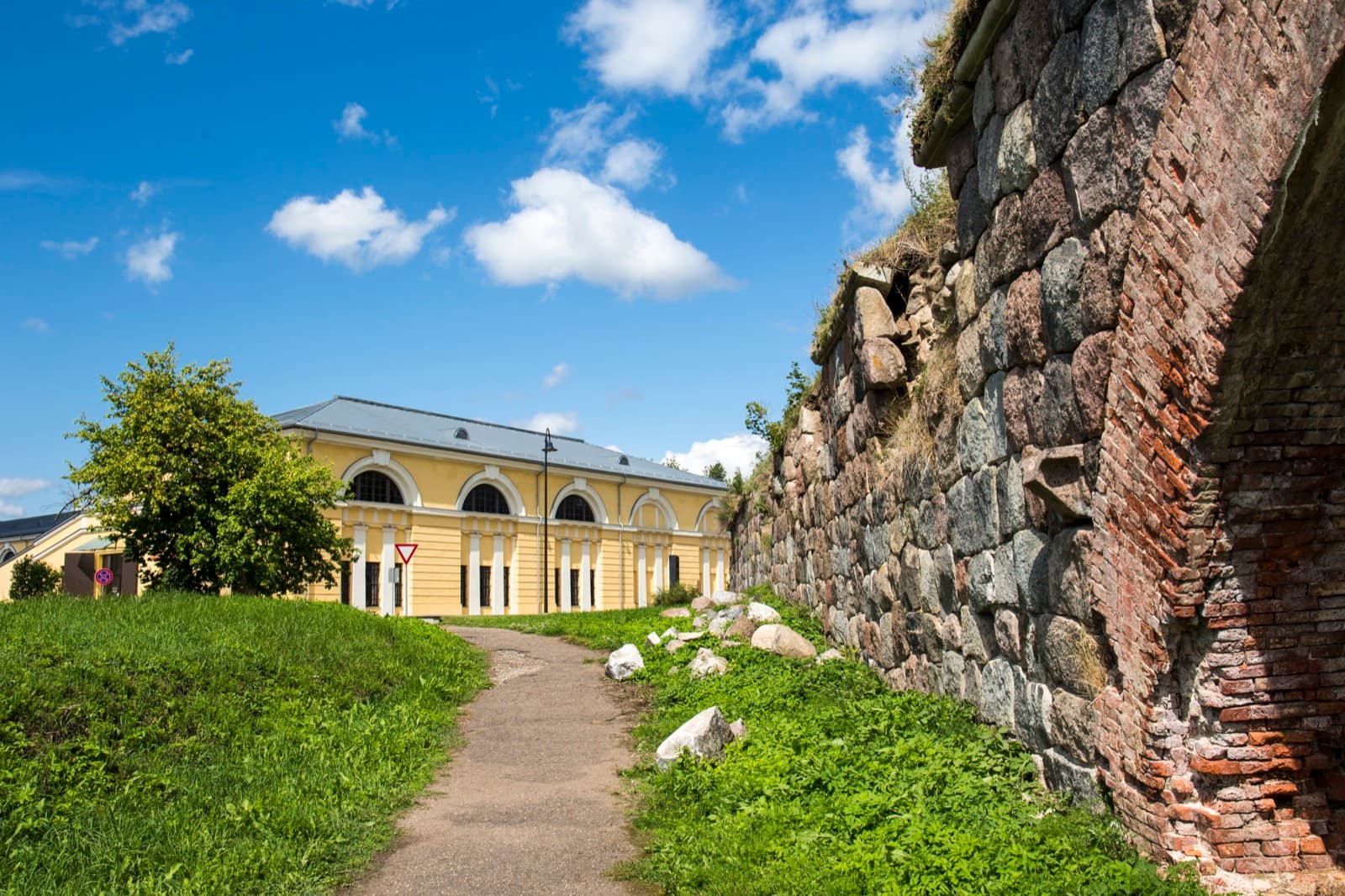
You enter through monumental gates into a fortress that covers about 150 hectares, earthwork ramparts and moats laid out from 1810 around grids of barracks, arsenals and officers' houses. It is the last bastion-type fortress in the region to survive largely without later alteration, and the scale is striking. The fabric is a mix of restored showpieces, the arsenal, the gingerbread water-lifting tower, the Nicholas Gate, and plain, still-lived-in blocks, some handsome, some worn.
What makes Cietoksnis unusual is that it is a real district, open and inhabited, not just a monument. People live inside the walls, and the Mark Rothko Art Centre has made the fortress a cultural destination. Mark Rothko was born here in 1903, when the city was Dvinsk in the Russian Empire, and the centre in the 1833 arsenal is the only place in Europe that permanently shows original Rothko works.
Who lives here, and what the streets look like
The population inside the walls is ordinary Daugavpils, the same Russian-speaking Latgale mix as the rest of the city. Around 89% of residents spoke Russian at home as of 2018, and the ethnic picture is roughly half Russian, then Poles, Belarusians and Latvians. Say it plainly: daily life here runs largely in Russian, with Latvian the sole official language, and the city is more multi-ethnic than almost-wholly-Russian Narva across in Estonia.
These are mostly long-term residents on lower-to-middle incomes, joined now by the culture-sector staff and the visitors the Rothko Centre draws. The streetscape is barracks and officers' housing behind the ramparts, spread out and green, quiet in a way the centre is not.
Getting around
The fortress has its own tram connection. A tram loop was built inside the walls in 1977, on the historic Stropi to Cietoksnis route, so the district sits on Daugavpils's four-line network, one of only three tram systems in Latvia, with city buses filling in. Inside the walls the ground is flat and walkable, if spread out, and the centre and railway station are a short tram ride southeast.
The wider caveat is the city's, not the district's: Riga Airport is about 230 km northwest, so there is no fast air link, and Vilnius Airport in Lithuania, about 185 km away, is comparable for some trips. Confirm current Riga train times before you rely on them.
Typical weekday minutes from Cietoksnis, with the icon showing how. Times via Google Routes API for a typical weekday around 08:00, measured from the neighborhood centre; the icon shows the fastest sensible way., 2026-08.
Daily life
Everyday shopping leans on the district's big neighbour. Ditton Nams, which houses a Rimi, sits right beside the fortress at Cietokšņa iela 60 and is the largest shopping and entertainment centre in all of Latgale, with chains, a farmers' market hall and cinema-scale amenities. Inside the walls, though, everyday retail is thin, this is a heritage-and-housing quarter, so be honest with yourself about wanting a shop on the corner. For food delivery, Wolt and Bolt Food both cover Daugavpils, so delivery does reach the fortress.
Local Places Worth Knowing
Independent and close by, chosen on merit. Nobody pays to appear here.
The only permanent public display of original Rothko paintings in Europe, in the fortress's restored 1833 arsenal.
The café inside the arsenal building at the Rothko Centre, the natural coffee stop within the fortress walls.
A well-reviewed Daugavpils restaurant of Mediterranean and European cooking, a step-up dining option tied to the city's art scene.
Latgale's largest shopping and entertainment centre at Cietokšņa iela 60 beside the fortress, chains plus a local farmers' market hall.
View on Google MapsChecked August 2026. Places close and change, so tell us if something here is out of date.
Schools and families
Schools serve the district and the wider city, but Latvia publishes centralised-exam results and no usable per-school quality ranking. It is the sort of gap we would rather flag than fill, which is part of why we build these Daugavpils guides the way we do. Check the specific schools and their language of instruction before you sign a lease or purchase.
Kids Friendly. Space to roam on the bastions and lawns plus the Rothko Centre on the doorstep, though everyday shops, services and playgrounds inside the walls are limited.
Pet Friendly. Open ramparts, moats and riverside give excellent walking, but active roads through the gates, uneven historic ground and heritage areas mean keep dogs leashed.
Green space, leisure and eating out
Green space is the whole point here. The ramparts, moats and gates are open at all hours as public space, the bastions carry open lawns, and riverside walks run along the Daugava. The Mark Rothko Art Centre sits in the restored arsenal, with the fortress culture and information centre in the old water tower. Eating out inside the walls is limited to the Arsenāls café and a handful of spots, with the fuller choice, including ART HUB, in and around the centre a short ride away.
What it costs
Cietoksnis is among the cheapest stock in one of Latvia's cheapest cities. The fortress housing is unusual, protected barracks conversions, but broadly sits at or below the city figure. Latvia publishes no official per-district figure, so we use Numbeo's crowd-sourced city numbers: about 767 EUR / m² ≈ $80 / sq ft to buy outside the centre, and roughly 250 EUR / mo for a one-bedroom to rent. Both are market estimates, and heritage stock varies a lot, so confirm live listings before you commit.
Weather and climate
Seasonal averages for Daugavpils, one representative month per season. LVĢMC 1991-2020 normals (Daugavpils station) via Wikipedia climate box; a continental inland climate, colder winters and warmer summers than coastal Latvia; the climate box gives annual sunshine (~1,789 hours) and annual rain-days (~117) only, so per-season sun-hours and rain-days are not separately published.
The honest downsides
It is a monument people live in. Upkeep is uneven, restored set-pieces sit next to worn barracks, and parking, services and everyday retail inside the walls are limited. Heritage rules also constrain what residents can change about their own homes.
It carries the city's wider weaknesses. The distance from Riga, about 230 km, a shrinking population and the Latgale region's higher unemployment all apply here as they do across Daugavpils. The quiet and the low prices come with a regional economy under strain.
Crime and safety
Latvia's statistics office publishes recorded crime only by municipality, so there is no standalone Cietoksnis figure; pull the exact city number from the CSP table before you rely on it. The one captured measure is Numbeo's crowd-sourced index, which reads Daugavpils as a low-crime city with very high daytime walking safety and low violent crime. Latvia as a whole has carried the EU's highest recorded homicide rate in recent years, but that is a national statistic shaped by wider social factors, not a fortress-street fact, and Latgale's status as the poorest region is best read as economics rather than street danger.
Is this you?
If you want quiet, space and real heritage on a small budget, are comfortable in a Russian-speaking city, and do not mind driving or catching the tram for a proper shop, Cietoksnis is one of the more remarkable places to live in Latvia. If you would rather have the shops, cafés and buzz on your doorstep, the centre around Rīgas iela will suit you better; if you just want the cheapest practical block housing, look at Jaunbūve.
Want to know what homes here are actually worth?
Join the waitlistHow we source this
How we put this together. Gathered on the ground by our local field team and written up by the Apraiz research team. Every figure above carries its own source and date. The scores are not computed by the build; walking and transport will use open map and transit data first, then Apraiz's own model. We update prices quarterly, transport and amenities twice a year, and school data when the source publishes.
Sources: Wikipedia (Daugavpils fortress), rothkomuseum.com, Wikipedia, Numbeo, Latvia Official Statistics (CSP).
Safety and crime in Daugavpils →