
Long Story ShortReadHide
- What it is: a tiny protected wooden district just north of the centre on the Emajõgi's right bank, once the poor's quarter, now a gentle bohemian enclave with streets named after food.
- Who it suits: artists, students, academics and restorers who want village calm and wooden charm a few minutes' walk from the city centre.
- What it costs: grouped with Karlova at about 2 150 EUR / m² ≈ $230 / sq ft to buy, below the centre, though restored houses go higher.
- What people complain about: the low ground floods, some lanes are unpaved and muddy in spring, and everyday retail is thin.
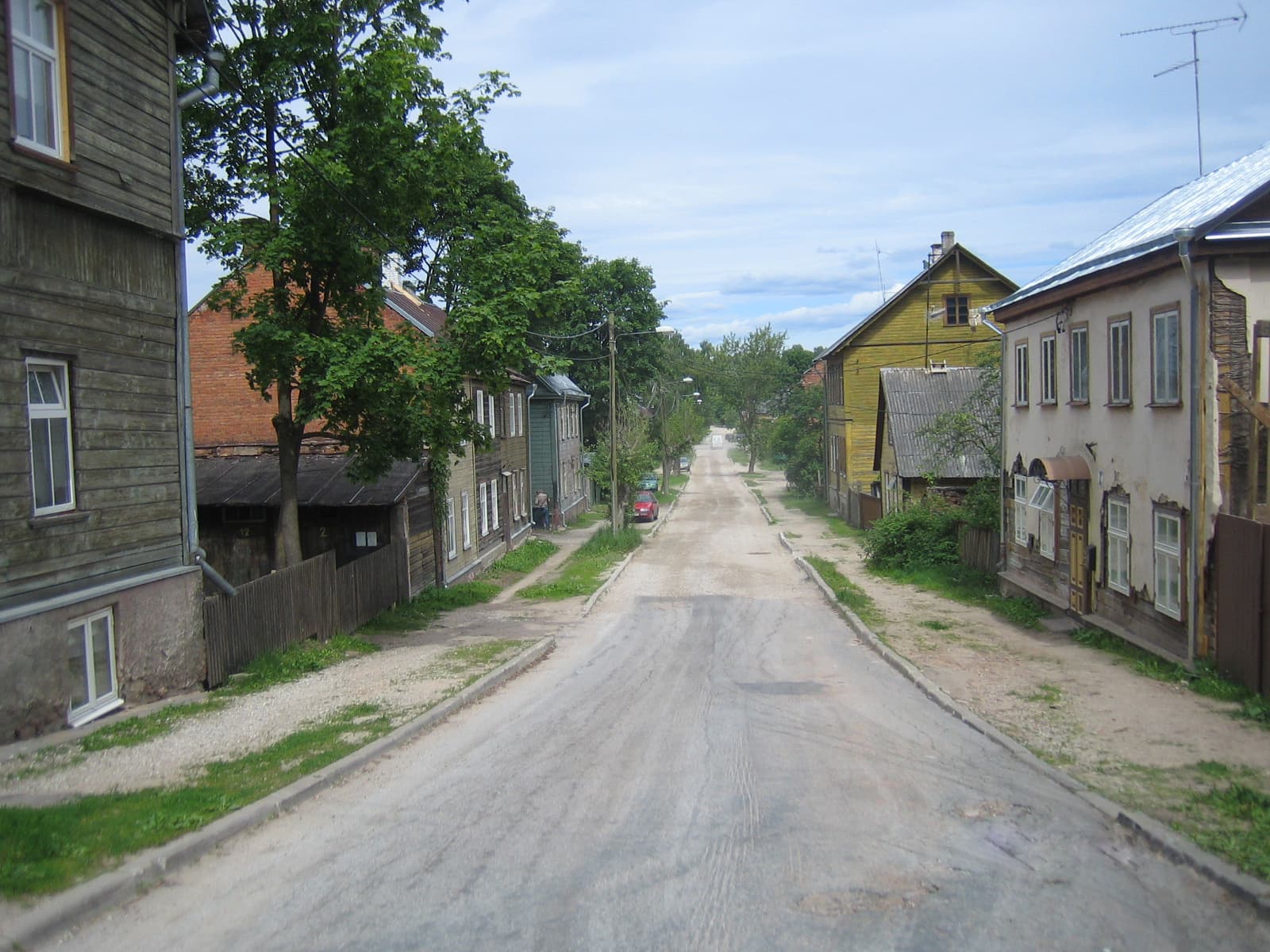
First impressions
Supilinn feels like a village that the city grew around. One- and two-storey painted wooden houses sit in green courtyards, lanes run unpaved between them, allotment gardens fill the gaps, and the Emajõgi is close. The streets are named for food, Herne (pea), Marja (berry), Meloni (melon), Oa (bean), which is how Soup Town got its name.
At 0.48 square kilometres it is the smallest neighborhood in Tartu, home to around 1,900 people. It was historically the poor's quarter and for years was neglected, but it is now a protected heritage wooden district that residents have carefully restored, with a strong community identity run through the Supilinna Selts society.
The honest caveat is the ground itself. This is low land by the river, and the lowest streets flood.
Who lives here, and what the streets look like
Supilinn is a mix of long-time residents, students, artists, academics and young creatives who took on the wooden houses and brought them back. It is a tight, self-aware community, the kind of place with its own society, its own festival and its own strong opinions about the neighborhood.
The streetscape is the whole appeal: painted timber facades, green yards, garden fences and the river at the end of the lane. It is flat and bike-friendly, and the walk to the centre along Herne street takes only a few minutes.
Getting around
Supilinn leans on walking. It is a few minutes on foot from the full city centre, so most trips simply start with a stroll down Herne. Fewer bus lines actually enter the district than serve the centre, which is why the transit score is modest: for a bus you usually walk to the edge or into the centre first. It is flat and easy to cycle, and Tartu's biogas buses are a short walk away once you reach the main streets.
Typical weekday minutes from Supilinn, with the icon showing how. Times via Google Routes API for a typical weekday around 08:00, measured from the neighborhood centre; the icon shows the fastest sensible way., 2026-08.
Daily life
Daily shopping here is small-scale and charming rather than convenient. The beloved Herne pood corner shop sells homemade food and pastries, the Saiasahwer bakery covers bread, and the Mülä / Käkk bar-café is the social anchor, but for a full grocery run residents walk into the centre. It is honestly thin on everyday retail, so treat the centre as your supermarket. For food delivery, Wolt and Bolt Food both cover Tartu in full, which fills a lot of the gap.
Local Places Worth Knowing
Independent and close by, chosen on merit. Nobody pays to appear here.
A community bar-café in a red-brick building on Kroonuaia; the name is Tartu dialect for thick soup and small talk, and it is a Supilinn social hub.
A small Supilinn bakery-café for fresh pastries and bread, a neighborhood staple.
A long-running neighborhood pub with a broad beer list and live Estonian bands at weekends.
The legendary tiny Supilinn corner shop, known for simple homemade food and excellent pastries.
Checked August 2026. Places close and change, so tell us if something here is out of date.
Schools and families
Central schools and the university are a short walk away, and Estonia gives families broad school choice rather than tying you to one catchment. Estonia publishes no per-school quality ranking. It is the sort of gap we would rather flag than fill, which is part of why we build these Tartu guides the way we do. Check the specific schools and their admission before you sign a lease or purchase.
Kids Restricted. Quiet, green and community-minded, which suits children, but flood-prone lanes, thin everyday retail and a strong student presence mean families often look next door in Karlova.
Pet Friendly. Riverbank meadows, quiet unpaved lanes and garden courtyards make Supilinn one of the most dog-walkable districts in Tartu.
Green space, leisure and eating out
Green space is everywhere and it is what makes Supilinn. The Emajõgi riverbank and its meadows run along one edge, garden courtyards and allotments fill the district, and the Tartu Song Festival Grounds sit just to the west toward Tähtvere. Eating and drinking is small and local, the neighborhood pub, the bakery-café and the community bar rather than a restaurant strip, but that is the point of the place.
What it costs
Supilinn buys below the centre. Market reviews group it with Karlova at about 2 150 EUR / m² ≈ $230 / sq ft (Arcovara via Tartu Postimees, 2024, €2,000-2,300), against a Tartu city average of roughly €2,443/m², though a carefully restored wooden flat can go higher. Estonia publishes no per-district monthly rent, so we show the Tartu city estimate of around 700 EUR / mo for a 2-bed as a guide (Expat Focus aggregator, €650-750).
Weather and climate
Seasonal averages for Tartu, one representative month per season. Estonian Weather Service (Riigi Ilmateenistus) 1991-2020 normals (Tartu-Tõravere) via Wikipedia climate box.
The honest downsides
The low ground floods. Supilinn sits on the riverbank, and its lowest lanes flood, while some streets are unpaved and muddy through spring. It is part of the character, but it is a real practical cost.
The housing needs work and the retail is thin. Old wooden houses mean uneven insulation and renovation quality and limited parking, and there is barely a shop inside the district. You gain charm and lose convenience.
Crime and safety
Tartu reads as a calm university city, and Supilinn feels like a quiet residential pocket of it. Estonia publishes registered crime only at county level, so there is no Tartu-city or per-district figure: the finest number available is for Tartu county, about 2,480 registered crimes per 100,000 residents in 2024, the 3rd-highest county rate in Estonia and above the national average of 2,060. That covers the whole county, not this district, and no county violent-crime rate is published.
Is this you?
If you want wooden charm, riverside calm and a real community, and you can live with flood-prone lanes and a walk to the shops, Supilinn is one of the most characterful addresses in Tartu. If you love the wooden-district feel but want more shops, cafés and a livelier high street, Karlova next door gives you the same architecture with more going on.
Want to know what homes here are actually worth?
Join the waitlistHow we source this
How we put this together. Gathered on the ground by our local field team and written up by the Apraiz research team. Every figure above carries its own source and date. The scores are not computed by the build; walking and transport will use open map and transit data first, then Apraiz's own model. We update prices quarterly, transport and amenities twice a year, and school data when the source publishes.
Sources: Wikipedia, Puhka Eestis / Supilinna Selts, Tartu Postimees (Arcovara market review), Justiits- ja Digiministeerium, Expat Focus (aggregator estimate).
Safety and crime in Tartu →