
Long Story ShortReadHide
- What it is: a leafy seaside-and-pinewood villa district on the south-west edge of the city, single-family homes among protected pines, about 5 to 6 km from the centre.
- Who it suits: families, nature-lovers and older owners who want space, forest and sea over walkable services, and who have a car.
- What it costs: house territory with no separate per-district price, so the city apartment average of about 2 183 EUR / m² ≈ $230 / sq ft is the labelled guide, with villas trading on plot and forest amenity.
- What people complain about: the distance and thin services, you drive or bus for almost everything, and it is quiet to the point of dead in winter.
First impressions
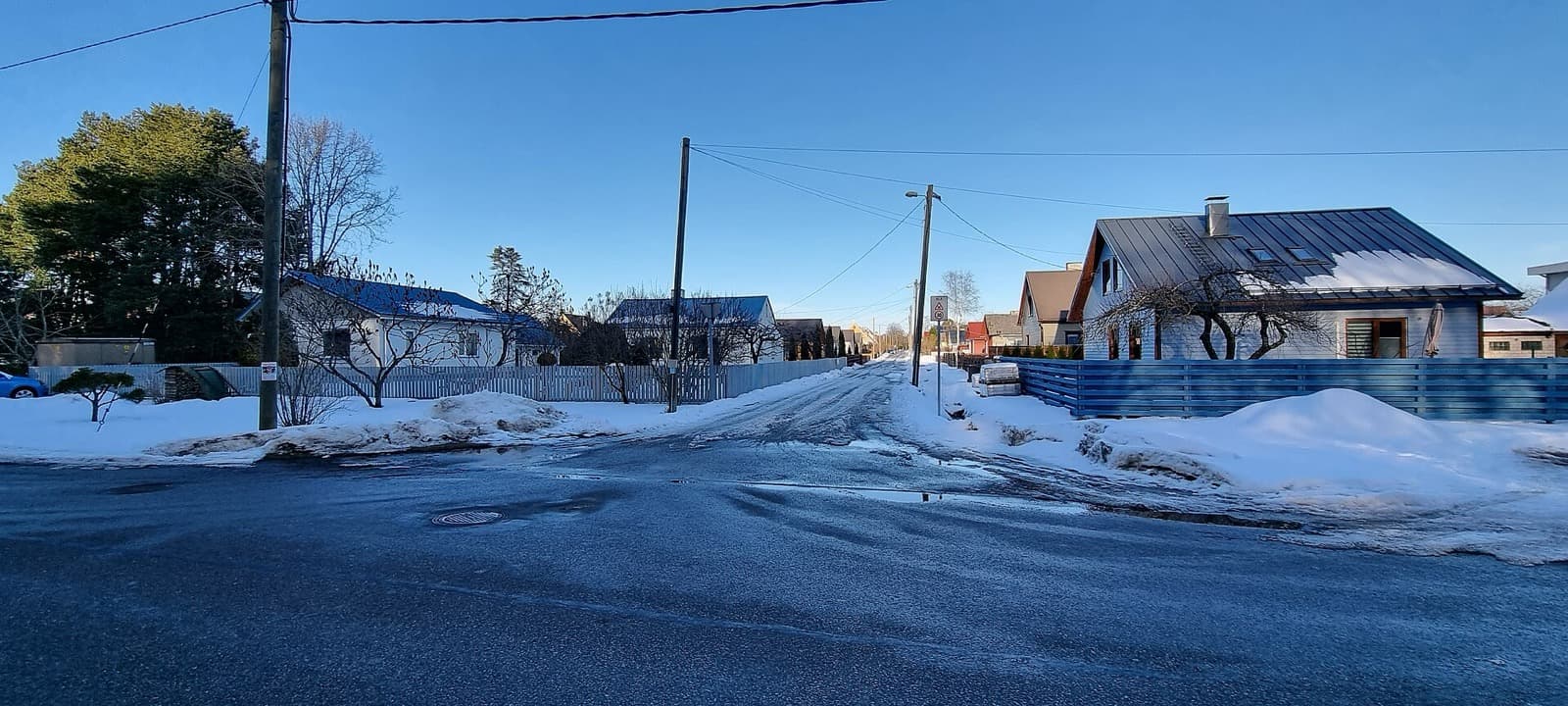
Raeküla is the quiet edge of the city, and it wears it well. Detached houses and villas sit among tall pines on sandy soil, quiet lanes thread between them, and the Raeküla pinewood and coastal dunes give way to the sea to the west. It is green, calm and low-density, with the wooden Raeküla school of 1912 and the community centre as its local anchors.
The trade-off is right there in the geography. At 5 to 6 km from the centre, this is the least walkable-to-services of the four districts, and it is car-or-bus dependent for almost everything. What you get in return is forest on the doorstep, sea air and near-total quiet, with far less of the summer churn than the beach strip.
Who lives here, and what the streets look like
This is a settled, owner-occupier district. The residents are mostly year-round households, families and older owners who chose space, forest and sea over walkable convenience, with only a scattering of summer and holiday homes and little of the beach strip's seasonal swing.
The streetscape is pines and villas: detached homes set among protected pinewood, sandy soil underfoot, quiet lanes, and the dunes and shore beyond. It is low-density and green, closer to living in a forest than in a town.
Getting around
Getting around means a car or a bus. The centre is 5 to 6 km away, city bus lines run in, and the district is flat and excellent for cycling and forest walking and running. But the distance is the defining fact: this is edge-of-town living, car-oriented for daily errands, and the least connected of Pärnu's four districts.
Typical weekday minutes from Raeküla, with the icon showing how. Times via Google Routes API for a typical weekday around 08:00, measured from the neighborhood centre; the icon shows the fastest sensible way., 2026-08.
Daily life
Daily life here is honestly not about shopping. There are very few shops in the district, so residents drive or bus to the centre, the beach-side outlets or a Selver for groceries. For food delivery, Wolt and Bolt Food sit at the edge of their radius out here, and choice is limited, thinning further off-season. This is a residential and forest area, not a retail one, and it is best understood that way.
Local Places Worth Knowing
Independent and close by, chosen on merit. Nobody pays to appear here. Raeküla is genuinely thin on its own commercial venues, so beyond the health trails and the Vanakooli community centre, the picks below are nearby beach and resort spots, honestly flagged as not in-district.
The district's signature pinewood trail network, 3, 5 and 10 km with a free outdoor gym, and the reason many people live here.
A 1912 wooden-schoolhouse community and culture centre at Lembitu 1, with a café-kitchen, concerts and events, honestly a local hub rather than a full daily café.
View on Google MapsThe nearest proper restaurant, on the beach promenade in the resort district, noted as a short drive away rather than in Raeküla itself.
View on Google MapsA seasonal beach-front café-bar toward the resort strip, another nearby option for a coffee out, not an in-district venue.
Checked August 2026. Places close and change, so tell us if something here is out of date.
Schools and families
Pärnu families choose schools by catchment and preference, not by any published ranking, and Raeküla's space and forest make it a draw for families who want room to roam, with the historic wooden Raeküla school as a local anchor. Estonia, like Finland, publishes no per-school quality ranking. It is the sort of gap we would rather flag than fill, which is part of why we build these Pärnu guides the way we do. Check the specific schools and their admission before you sign a lease or purchase.
Kids Friendly. Space, forest and sea suit families who want room to roam, with the wooden Raeküla school and community centre as local anchors, though daily services mean a car or bus trip.
Pet Friendly. Pinewood trails, quiet lanes and the nearby seaside make this arguably the most dog-walk-friendly district in the city, with the marked dog-permitted beach sections reachable along the shore.
Green space, leisure and eating out
Green space is the entire point of Raeküla. The Raeküla pinewood, protected since 1958 and covering about 126 hectares, wraps the district, the Reiu-Raeküla health trails run 3, 5 and 10 km through it with a free outdoor gym, and the dunes and sea are minutes away. Leisure here is outdoor and self-directed, walking, running, cycling and skiing. Eating out, by contrast, is nearly absent in-district, so a meal out means a short trip toward the beach and the centre, to places like the Rannahotelli restoran.
What it costs
There is no separate Raeküla price, because the district is house dominated with too few apartment sales to publish a district €/m². We show the Pärnu city apartment average of about 2 183 EUR / m² ≈ $230 / sq ft (LVM Kinnisvara, 2023) as the labelled fallback, noting the city house median was €155,000 and the detached villas here trade on plot and forest amenity rather than a headline per-square-metre. On rent, the stock is mostly owner-occupied houses, so supply is scarce and the city 2-room band of around 450 EUR / mo is the guide for the rare flat.
Weather and climate
Seasonal averages for Pärnu, one representative month per season. Estonian Weather Service (Riigi Ilmateenistus) 1991-2020 normals (Pärnu) via Wikipedia climate box; one of Estonia's sunniest, warmest-summer spots; per-season rain-days not published.
The honest downsides
Distance and thin services. You need a car or a bus for almost everything, and there is little independent café, restaurant or retail life in the district itself. Convenience is not what Raeküla sells.
Quiet to the point of dead. The calm is real and, especially in winter, it can tip into isolation. This is not for anyone who wants walkable buzz or life on the street.
Crime and safety
Raeküla reads as very quiet and safe, a low-density villa district in the pines with a settled, owner-occupier population. Estonia publishes crime only by county, so there is no standalone Pärnu or district figure. The 2024 national rate was about 206 registered crimes per 10,000 residents, and Pärnumaa is not among the four highest-crime counties, so it sits below or near that line.
Is this you?
If you want forest and sea on the doorstep, space for a family and a dog, and you have a car and value quiet over convenience, Raeküla is the calmest corner of Pärnu. If you want the same greenery but closer to the beach, the promenade and a bit more life, the Rannarajoon resort strip is the natural alternative; if you want to live on foot, look at the Kesklinn old town instead.
Want to know what homes here are actually worth?
Join the waitlistHow we source this
How we put this together. Gathered on the ground by our local field team and written up by the Apraiz research team. Every figure above carries its own source and date. The scores are not computed by the build; walking and transport will use open map and transit data first, then Apraiz's own model. We update prices quarterly, transport and amenities twice a year, and school data when the source publishes.
Sources: Wikipedia, LVM Kinnisvara, Estonian Wikipedia, Visit Estonia / terviserajad.ee, Raeküla Vanakooli Keskus.
Safety and crime in Pärnu →Nearby: Kesklinn · Rannarajoon · Ülejõe