
Long Story ShortReadHide
- What it is: the historic heart of Saaremaa's main town, a low-rise wooden and stucco old town around the pedestrian main square, with the medieval castle in its seaside park a few minutes' walk south.
- Who it suits: people who want a genuinely walkable small town, clean sea air and castle-park calm, and do not mind that the mainland is a ferry away.
- What it costs: about 1 270 EUR / m² ≈ $140 / sq ft to buy in the old-town core, cheap by European standards.
- What people complain about: island remoteness and ferry dependence, and how quiet the town goes out of season.
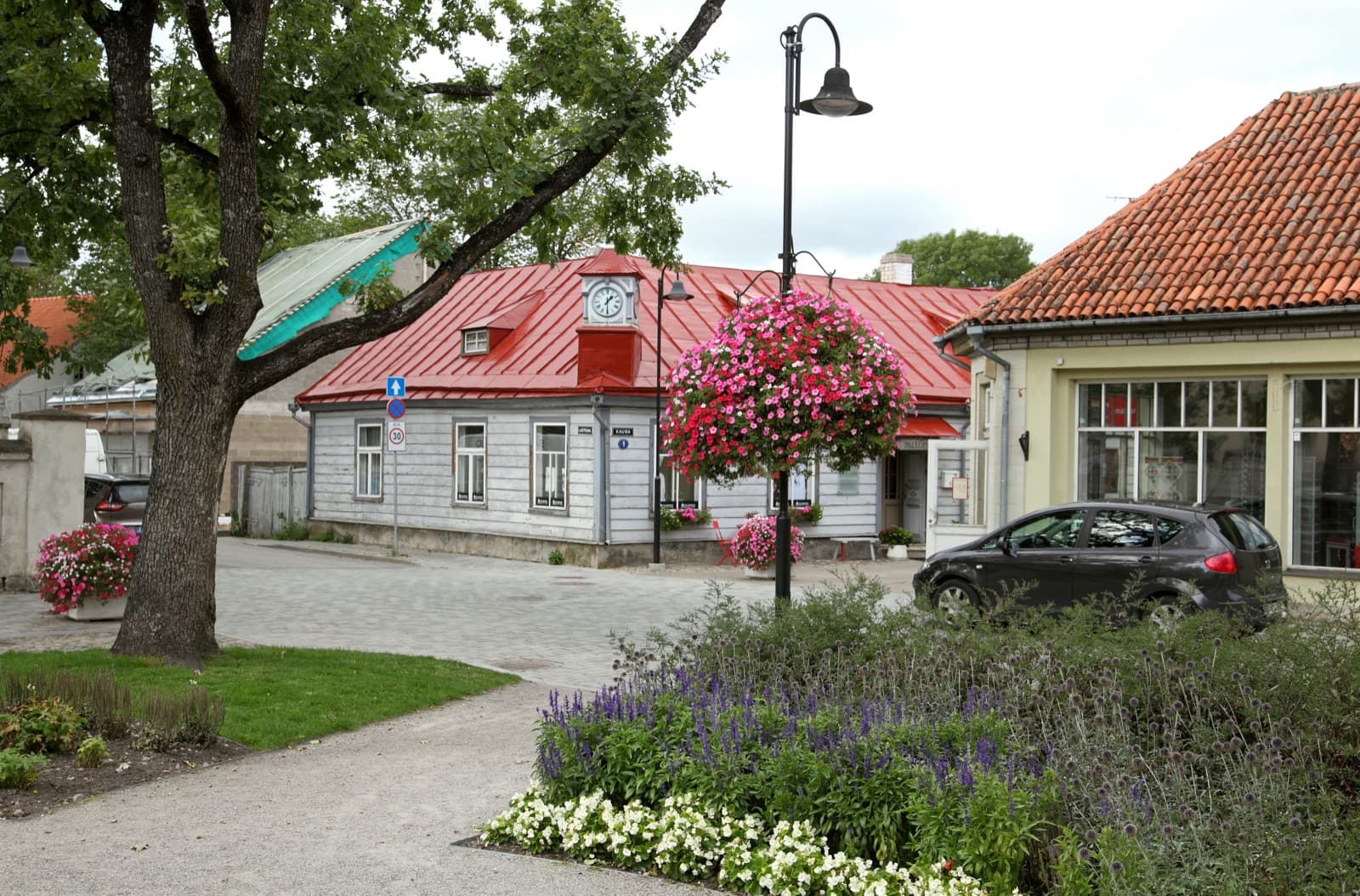
First impressions
Kesklinn is Kuressaare in miniature: a compact grid of two- and three-storey wooden and plastered houses that you can cross on foot in minutes. The main square, Keskväljak, has been remade into a pedestrian plaza with a water feature that children play in through the summer, and Tallinna street runs off it with the town's shops and cafés. A short walk south, Kuressaare Castle sits in its ramparted park by the sea, a stone bishop's castle from the 14th century that is one of the best-preserved in the Baltics.
Everything that matters, the market, the shops, the cafés, the castle park and the shore, sits inside a roughly ten-minute walk. It is quiet and low-key for most of the year, then fills up with Estonian and Finnish holidaymakers in July and August.
Who lives here, and what the streets look like
The centre draws long-term townspeople, retirees and people working in administration, tourism and the spa hotels. Kuressaare and Saaremaa skew older than mainland Estonian cities, because younger residents tend to leave for study and work in Tallinn and Tartu, and summer brings a large seasonal visitor population on top of the roughly 13,000 who live here year round.
The streetscape is the appeal. Low wooden and stucco facades face onto the square and the shopping street, the castle park opens onto the water, and the whole thing stays human-scaled, a small Baltic resort town rather than a city.
Getting around
The centre runs on your feet. Most errands are on foot or by bike, and that is the point of living here. A car is normal for anything beyond town and is effectively required to reach the mainland, because there is no railway anywhere on Saaremaa. The only road link to the mainland is the Kuivastu to Virtsu car ferry, and the Kuivastu terminal sits about 70 km north-east of town, on the island of Muhu across the causeway. Kuressaare Airport, about 3 km away, gives a roughly 40-minute flight to Tallinn once or twice a day, and the bus station handles the intercity coaches, whose fare includes the ferry crossing.
Typical weekday minutes from Kesklinn, with the icon showing how. Times via Google Routes API for a typical weekday around 08:00, measured from the neighborhood centre; the icon shows the fastest sensible way., 2026-08.
Daily life
Everyday shopping is easy for a town this size. There are central grocers, the supermarket chains in and near town, and the Kuressaare market (Kuressaare Turg) for fresh island produce and crafts in the centre. For food delivery, Wolt and Bolt Food both reach Kuressaare, which is unusual for a town of 13,000, but be honest with yourself about the scale: the venue lists are short compared with a mainland city, so this is a town-centre convenience rather than an all-hours safety net.
Local Places Worth Knowing
Independent and close by, chosen on merit. Nobody pays to appear here.
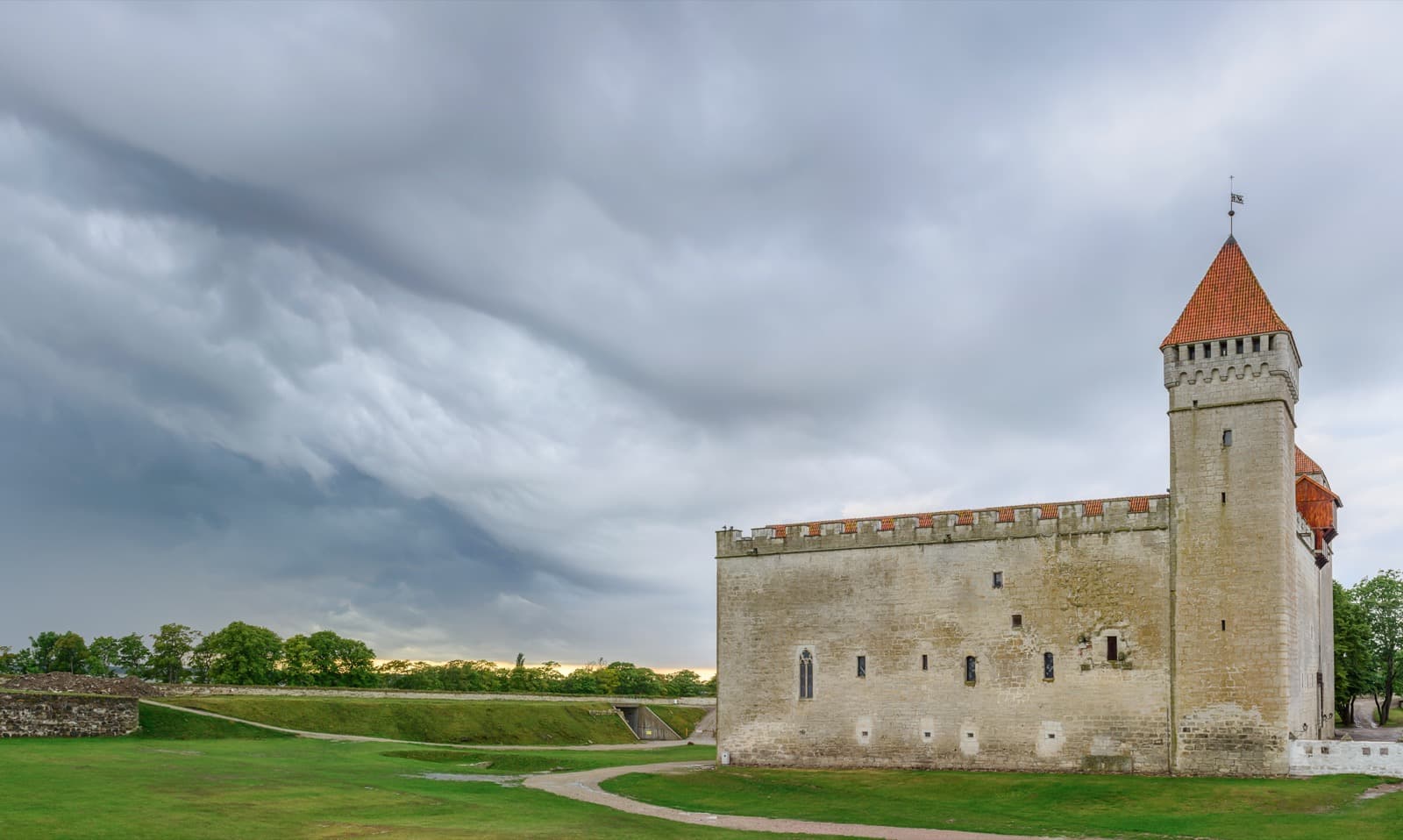 Photo MinuHiiumaa, CC BY-SA 3.0 ee, via Wikimedia Commons
The 14th-century bishop's castle in its ramparted seaside park, one of the best-preserved medieval castles in the Baltics, now the regional museum.
A local-fish restaurant with a French accent in the wooden Kuursaal resort hall by the castle park; the chef buys fresh fish each morning from the market or local fishermen.
A cosy old-town coffeehouse and bakery on Kauba street, with fresh bread and pastries made daily.
View on Google MapsThe central produce market: island vegetables, berries and mushrooms in season, plus Saaremaa knitwear and pottery.
Checked August 2026. Places close and change, so tell us if something here is out of date.
Schools and families
Kuressaare's schools serve the whole town, and the compact centre puts most of them within easy reach. Estonia publishes no official per-school ranking or league table. It is the sort of gap we would rather flag than fill, which is part of why we build these Kuressaare guides the way we do. Check the specific schools and their admission before you sign a lease or purchase.
Kids Friendly. Quiet, low-crime and compact, with the main square remade into a pedestrian plaza with a child-friendly water feature, and the castle park and sea a short walk away.
Pet Friendly. A small coastal town with the castle park, the promenade, the seashore and open island nature right around it; abundant walking and low traffic make it easy for a dog, though leash rules apply in the castle park.
Green space, leisure and eating out
Green space is built into the plan. The castle park (Lossipark), with its bastions and moat, is the town's central green, the sea and the promenade are minutes away, and several spa hotels cluster near the shore, part of Kuressaare's long life as a health resort since 1840. Eating out leans on a handful of genuine local kitchens, the fish-led Ku-Kuu in the Kuursaal hall among them, rather than a broad restaurant scene.
What it costs
Kuressaare is cheap by European standards, and the old-town core is the dearer end of it. Estonia's Land Board does not publish a per-district price, so we use the town figure: recent listings in the centre sit around 1 270 EUR / m² ≈ $140 / sq ft to buy, against a Saare-county average outside the main town of roughly €686/m². Estonia publishes no official per-town rent either, so we show a listing-derived guide: about 450 EUR / mo for a small one-room flat, with two-room flats running roughly €400 to €650 a month.
Weather and climate
Seasonal averages for Kuressaare, one representative month per season. Kuressaare Roomassaare station 2015-2024 via Wikipedia climate box (a shorter, more recent record than the 1991-2020 normal); maritime and mild for Estonia; rain-days not published.
The honest downsides
Island remoteness and ferry dependence. The only road link to the mainland is the Kuivastu to Virtsu ferry, about 70 km away, and in peak summer or in storms and ice the crossing can queue or be disrupted. Everything shipped onto the island carries that cost.
Winter quiet and thin services. Out of season the town goes very quiet, many tourist businesses scale back, and specialist services like some healthcare, big retail and higher education mean a flight, or a ferry and a long drive, to Tallinn.
Crime and safety
Kuressaare reads as calm and safe, and the wider evidence backs that up. Estonia publishes crime only nationally and by county, so there is no standalone town figure. The number shown is the national rate; Saare county, which covers Saaremaa, sits among the lowest-crime areas in the whole country, with the Ministry of Justice placing the West-Estonian islands at the bottom of the table. The exact county rate is published only as a chart, so we do not transcribe a precise figure.
Is this you?
If you want a genuinely walkable old town, castle-park calm and the sea on your doorstep, and the ferry distance does not put you off, Kesklinn is Kuressaare at its most characterful. If you want a quieter, plainer and slightly cheaper base where the town actually lives day to day, Kellamäe on the residential edge will suit you better.
Want to know what homes here are actually worth?
Join the waitlistHow we source this
How we put this together. Gathered on the ground by our local field team and written up by the Apraiz research team. Every figure above carries its own source and date. The scores are not computed by the build; walking and transport will use open map and transit data first, then Apraiz's own model. We update prices quarterly, transport and amenities twice a year, and school data when the source publishes.
Sources: Estonia Land Board (Maa- ja Ruumiamet) via Adaur, city24.ee, Wikipedia, Justiits- ja Digiministeerium, Kuritegevus Eestis 2023.
Safety and crime in Kuressaare →Nearby: Kellamäe · Roomassaare