
Long Story ShortReadHide
- What it is: a family residential district just west of central Aarhus, on the south-facing slope above the Aarhus Adal valley, grown from the old Aby settlement with a village-like local high street.
- Who it suits: families and a settled mix who want a quiet, green, walkable suburb with its own hovedgade and the valley close by.
- What it costs: near the Aarhus owner-flat average, below Risskov; no separate figure is published, so we show the city average of about 40,000 kr per m².
- What people complain about: no light rail, so trips into town lean on buses, and the busy Silkeborgvej through-road.
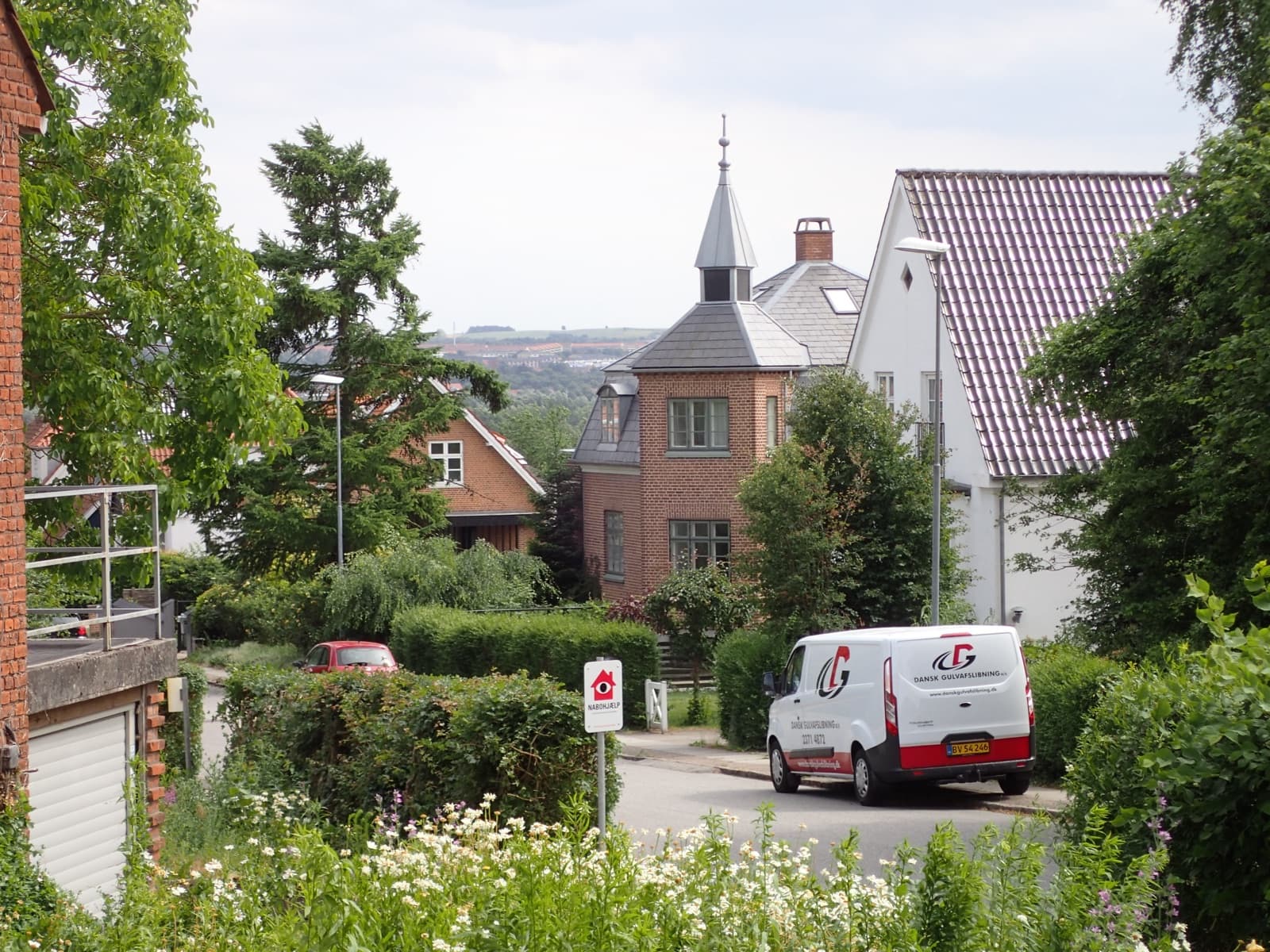
First impressions
Åbyhøj is the family district just west of the centre, on the south-facing slope above the Aarhus Adal valley, grown out of the old Aby settlement after Silkeborgvej was laid out in the 1850s. It is settled villa and family housing threaded by Silkeborgvej, with a village-like local high street, the Åbyhøj Hovedgade, at its heart and the green valley corridor below.
It is quiet, green and family-flavoured, with its own hovedgade and the valley on the doorstep.
This is settled, everyday family suburbia, honest about leaning on the bus and the busy through-road.
Who lives here, and what the streets look like
Åbyhøj is a settled family district, families and older residents alongside a broad age range, drawn by the quiet streets, the schools and the valley green. It is low-key and established.
The streetscape is family suburb: quiet residential streets of villas on the slope, the village-like Åbyhøj Hovedgade of independent shops, and the busier Silkeborgvej artery running through. It is walkable around the high street and greener toward the valley.
Getting around
Åbyhøj runs on the city bus. There is no Letbane stop, so it relies on Midttrafik city buses along Silkeborgvej into the centre, and it is compact and walkable around the hovedgade. The centre is about four kilometres east. Aarhus Airport at Tirstrup is about forty-five kilometres out, around forty-five minutes by car.
Typical weekday minutes from Åbyhøj Torv / Silkeborgvej, with the icon showing how. Times via Google Routes API for a typical weekday around 08:00, measured from the neighborhood centre; the icon shows the fastest sensible way (walk, bike, transit or car)., 2026-08.
Daily life
Day to day, Åbyhøj is the Hovedgade and Silkeborgvej. Grocery comes from the chains along Silkeborgvej, a Netto, a Rema 1000 and a Fotex, and the main street is the village-like Åbyhøj Hovedgade of independent shops, backed by the busier Silkeborgvej artery. It is settled, green and family suburbia. The split between the two streets is the thing to understand: Silkeborgvej carries the chains and the bus routes into the centre, while the Hovedgade keeps the independent shops, so the weekly run and the browsing trip happen a few minutes apart. For food delivery, Wolt and Just Eat both cover Aarhus.
Local Places Worth Knowing
Independent and close by, chosen on merit. Nobody pays to appear here. Links are being confirmed.
The area's historic medieval church, the original Aby parish church.
A local bakery in the heart of Åbyhøj for fresh bread and pastries on the hovedgade.
A café at Silkeborgvej 255A with fresh-made food, specialty coffee and Asian noodle dishes.
View on Google MapsA cosy lunch restaurant at Haslevej 17 for traditional Danish smorrebrod and a weekend buffet.
View on Google MapsChecked August 2026. Places close and change, so tell us if something here is out of date.
Schools and families
Åbyhøj is a classic family district with the nearest folkeskoler at Aby Skole and Ellekaerskolen. Denmark publishes school results through the Borne- og Undervisningsministeriet, but not at a per-district grain, so we do not rate schools here. It is worth checking admission before you sign a lease or purchase.
Kids Friendly. A classic family district with folkeskoler, quiet residential streets and valley parkland close by.
Pet Friendly. The Aarhus Adal valley green corridor and local parks make for good, quiet dog-walking.
Green space, leisure and eating out
Åbyhøj's outdoors is the valley and the parks. The Aarhus Adal valley and river corridor sit below the district, with local parks and Brabrand So and its trails a short way west, and culture and eating out cluster on the Hovedgade and Silkeborgvej. It is a district built for a quiet walk in the valley from the doorstep.
What it costs
Åbyhøj sits near the owner-flat average, below Risskov, as a settled family district. No Åbyhøj-specific sale price is published, so we show the Aarhus owner-flat average of about 40 195 DKK / m² (about €5,400 / m²) ≈ $580 / sq ft (Boligsiden, 2025), and this district sits near it. Rent is set by the market, and Denmark does not publish a per-city 2-room figure, so we show the indicative market estimate of around 8 000 DKK / mo (about €1,100 / mo) (Numbeo, 2026) as a guide.
Weather and climate
Seasonal averages for Aarhus, one representative month per season. DMI 1991-2020 normals (Aarhus Airport) via Wikipedia climate box.
The honest downsides
No light rail. Unlike Risskov and Viby, Åbyhøj has no Letbane stop, so trips into town lean on Midttrafik buses.
Busy Silkeborgvej. The main through-road carries heavy traffic and is far less charming than the quiet hovedgade, so the district's busy edge and its calm streets sit side by side.
Crime and safety
Åbyhøj is a quiet, settled family district with a low sense of everyday risk, and Denmark does not publish neighborhood-level crime figures, so there is no local number. It reads as a calm, low-incident suburb; the fuller Aarhus picture is on the city safety page.
Is this you?
If you want a quiet, green, walkable family suburb with its own hovedgade and the valley close by, and you do not mind leaning on the bus, Åbyhøj is settled, everyday family living just west of the centre. If you need a tramline at the door or a premium coastal address, Risskov or a central quarter will suit you better.
Want to know what homes here are actually worth?
Join the waitlistHow we source this
How we put this together. Gathered on the ground by our local field team and written up by the Apraiz research team. Every figure above carries its own source and date. The scores are not computed by the build; walking and transport will use open map and transit data first, then Apraiz's own model. We update prices quarterly, transport and amenities twice a year, and school data when the source publishes.
Sources: Boligsiden, Numbeo, Wikipedia, Danmarks Statistik, table STRAF11.
Safety and crime in Aarhus →Nearby: Midtbyen · Frederiksbjerg · Trøjborg